A black wolf beside the river was the moment we had hoped for in Yellowstone. The bison traffic jam on the way to the geysers was a little less efficient, but just as much a part of the trip. If you’re putting together a Yellowstone itinerary by car or campervan, here’s how our three park days fit together: a drive through thermal areas and the canyon, an early start for wildlife in the north, and one last day from Hayden Valley to Old Faithful.
We made this trip in September, in a rented campervan through a partnership with Travellers Autobarn. Our campervan review covers the van itself; this is the route we drove in Yellowstone.
Our three-day route at a glance
These were three days of a longer, 12-day Wyoming road trip, and our first experience living in a van.
- Day 1: West Yellowstone to Gibbon Falls, Artist Paint Pots, Norris, the canyon and Frying Pan Spring, then through Mammoth Hot Springs Village to a campsite north of the park.
- Day 2: Lamar Valley wolves at dawn, then the Mammoth Hot Springs terraces; that night at the West Yellowstone KOA.
- Day 3: Hayden Valley, Fountain Paint Pots, Grand Prismatic Spring and Old Faithful, then south toward Grand Teton.
Day one: Gibbon Falls, bubbling mud and the canyon
We began after a hotel night in West Yellowstone. We’d needed a break from van life and time to catch up on work, and waking to snow made that decision feel especially good. Once inside the park, we spotted bison just off the road. We took photos from the car window; other visitors were on foot, what looked to us like only about 15 feet away. Please give wildlife more room than that. The NPS safety guidance says to stay at least 25 yards from bison and elk, at least 100 yards from bears and wolves, and on boardwalks and designated trails in thermal areas.
Gibbon Falls was our first real stop. It looked impressive from the road, but don’t turn around at the upper overlook: the paved path continued on a gentle grade to a lower overlook, where we saw more of the falls and encountered fewer people. The upper overlook was about 600 feet from the parking area by our reckoning, so the extra walk was an easy decision.
A little farther along, we pulled over at a thermal area beside the river, where steam rose from small boiling pools and the air smelled like boiled eggs. We followed a footpath only as far as the area allowed. Yellowstone’s thermal ground deserves respect, even when a pool looks inviting from a distance.
Artist Paint Pots supplied the soundtrack. The mud pots bubbled, hissed and sent mud into the air; honestly, the gurgling noises were our favorite part. Getting up to them involved steps and an uphill walk, worth knowing if stairs are difficult for you. Our calves were still complaining about the nine-mile Delta Lake hike we’d done earlier in the trip, and they had plenty to say on the way down.
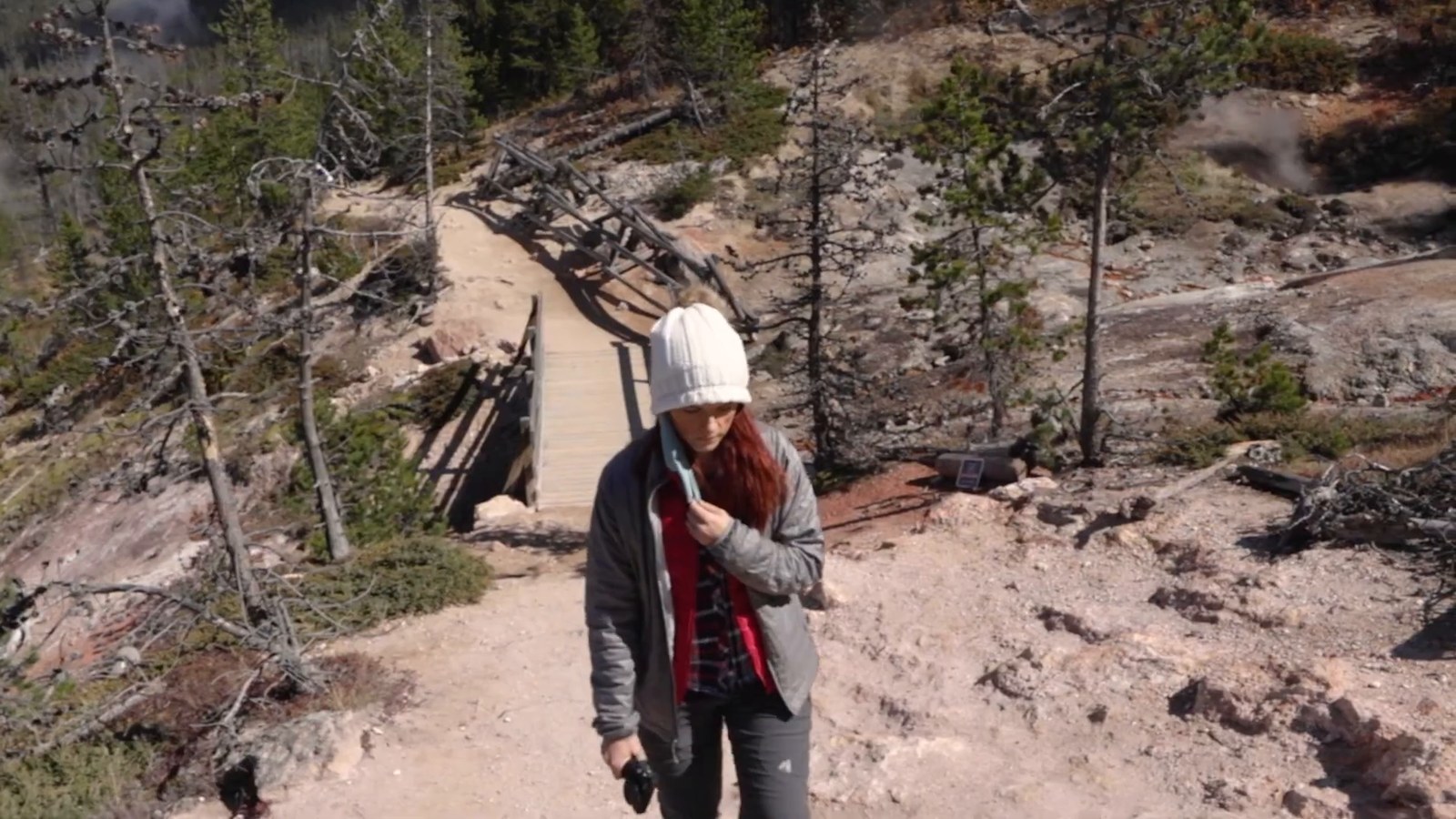
We made sandwiches and ramen with tuna at the Norris picnic area, grateful to be able to heat lunch in the van on a chilly day. Then came the canyon, which has a way of being easy to underrate until you’re standing there. We also stopped at Frying Pan Spring, the stinkiest one we’d been to. By the time we drove through Mammoth Hot Springs Village, elk were in the streets and around the buildings. We heard bugling, watched rangers keep people on foot back, and saved Mammoth’s boardwalks for the following day.
Day two: Wolves in Lamar Valley, then Mammoth Hot Springs
We left before sunrise for Lamar Valley and soon pulled into a wildlife jam. We hoped it meant wolves. Instead, a couple of coyotes were scavenging an elk kill—gross, yes, but fascinating to see. Someone there passed along word that wolf spotters had seen wolves farther into the valley, so we kept going. A bison in the road slowed us down first.
Then we spotted a black wolf moving along the river and heard another wolf howling. We climbed a ridge where other people were watching and, through binoculars and a zoom lens, could make out a pack across the valley. We guessed there were 20 to 30 wolves, though they were far too distant to count confidently. We stayed a long time, watching them lie down, get up and play. Seeing wolves in Yellowstone had been a bucket-list hope; that morning was worth the early start.
We pulled over for breakfast in the van, turning the bed into a dining table, and took the classic photo out the back door. Then we drove to the far end of Lamar Valley, near Cooke City, and turned back toward Mammoth.
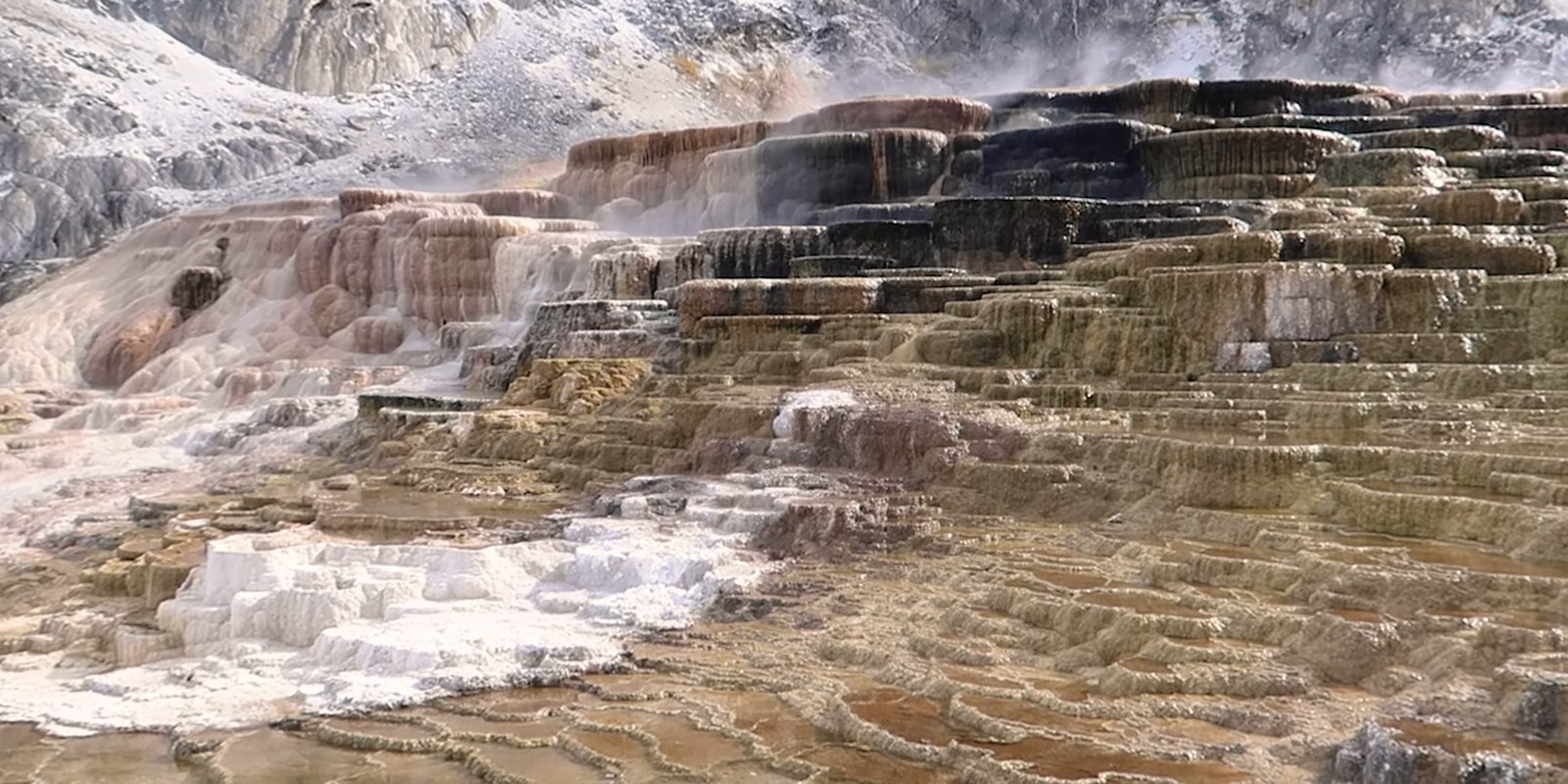
We had driven past Mammoth the previous evening, but this time we stopped for the terraces. Starting near the bottom, we followed the boardwalk upward through levels that each looked different. We’d recommend making time for it, with one practical warning: there were plenty of stairs and inclines. It was a workout, and the rotten-egg smell came along for parts of it. Pretty and stinky can apparently coexist quite happily in Yellowstone.
Day three: Hayden Valley to Old Faithful
We were up before the sun again, this time in Hayden Valley. We’d heard about a week and a half earlier that a grizzly had made an elk kill across the Yellowstone River from the road and had been feeding there. Ravens were scavenging when we arrived, so we waited in the cold to see whether the bear would appear. We went back to the van for breakfast—with bison outside—then tried waiting a little longer. No bear. That’s wildlife watching: Lamar had given us wolves; Hayden gave us a reason to keep moving.
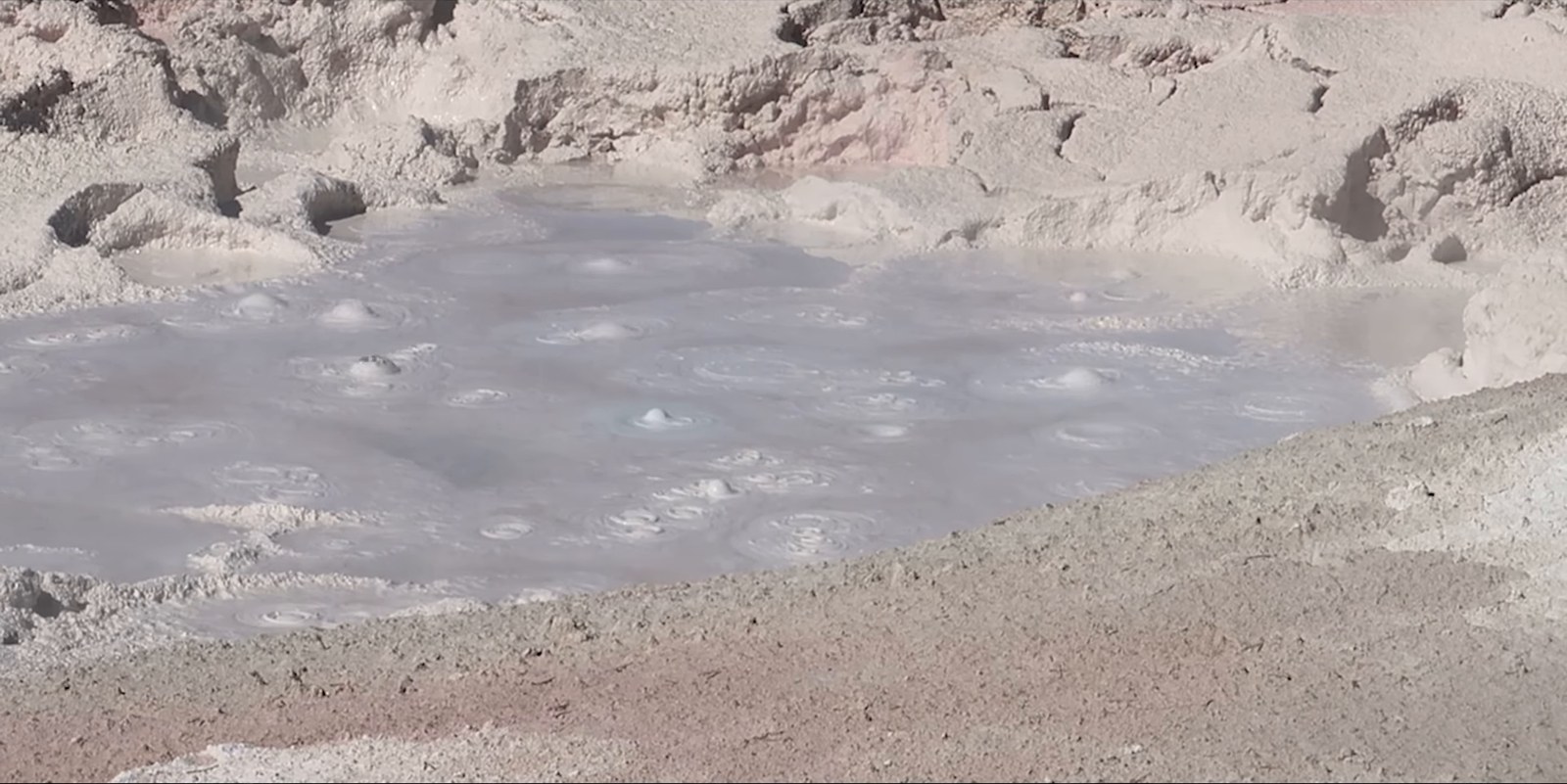
It’s about an hour’s drive from Hayden Valley to the Old Faithful area. On our way, a group of bison walking down the middle of the road backed up traffic for what felt like miles. Our first thermal stop afterward was Fountain Paint Pots. If you have time for only one sampling of Yellowstone’s geothermal features, we liked this one: bubbling mud, geysers and steaming pools were all part of the stop.
We had lunch in the van and later visited Grand Prismatic Spring. It was worth seeing, but a little crowded.
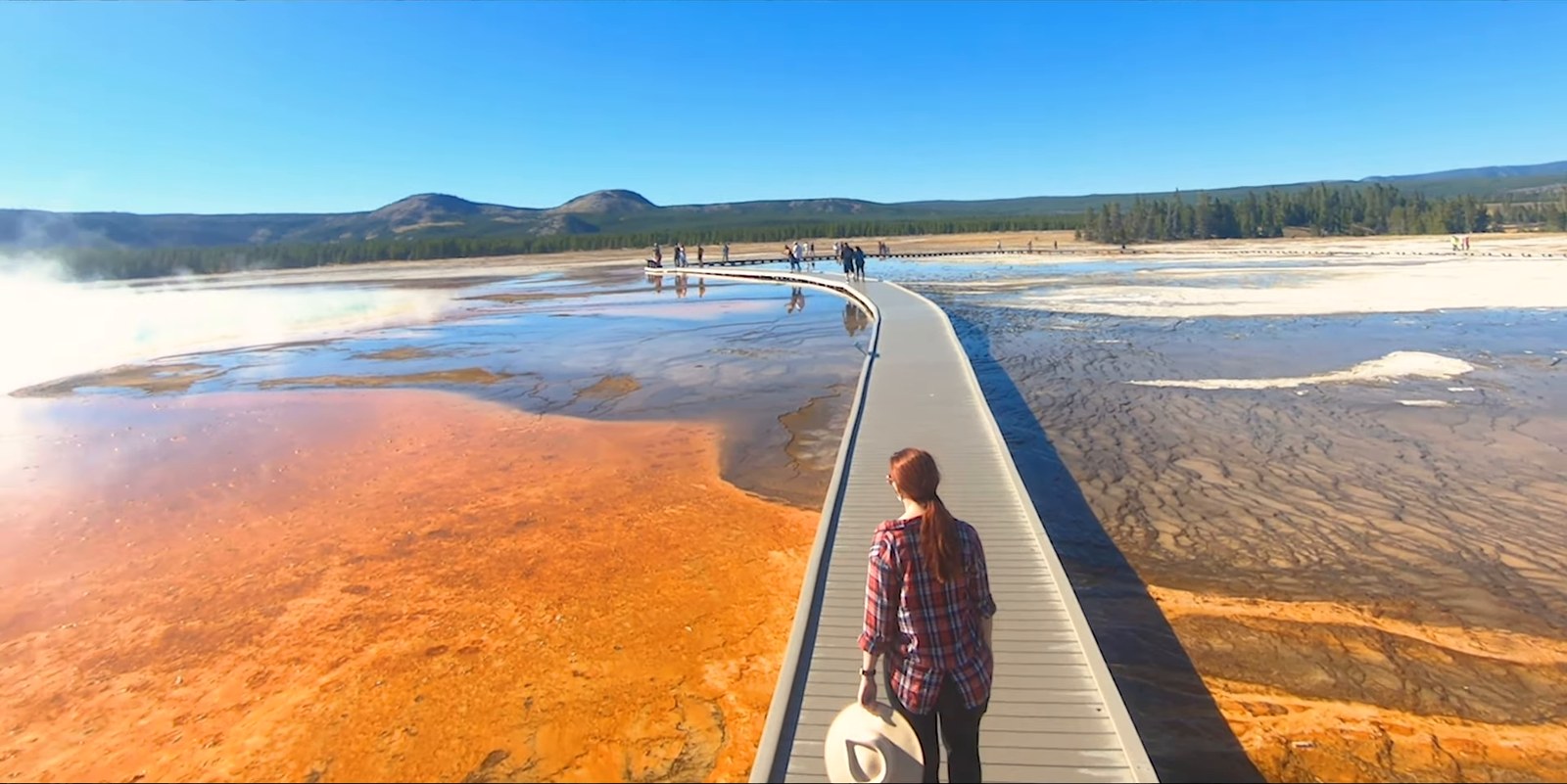
On an earlier visit, before this trip, we’d hiked up above it for a better view, and we thought the Fairy Falls trail led to that viewpoint. According to NPS, the Grand Prismatic Overlook Trail does start at the Fairy Falls trailhead, about a mile south of Midway Geyser Basin, and climbs 105 feet over 0.6 miles each way. NPS describes the hike as easy and says parking there is very limited, so check its page for current conditions before you go.
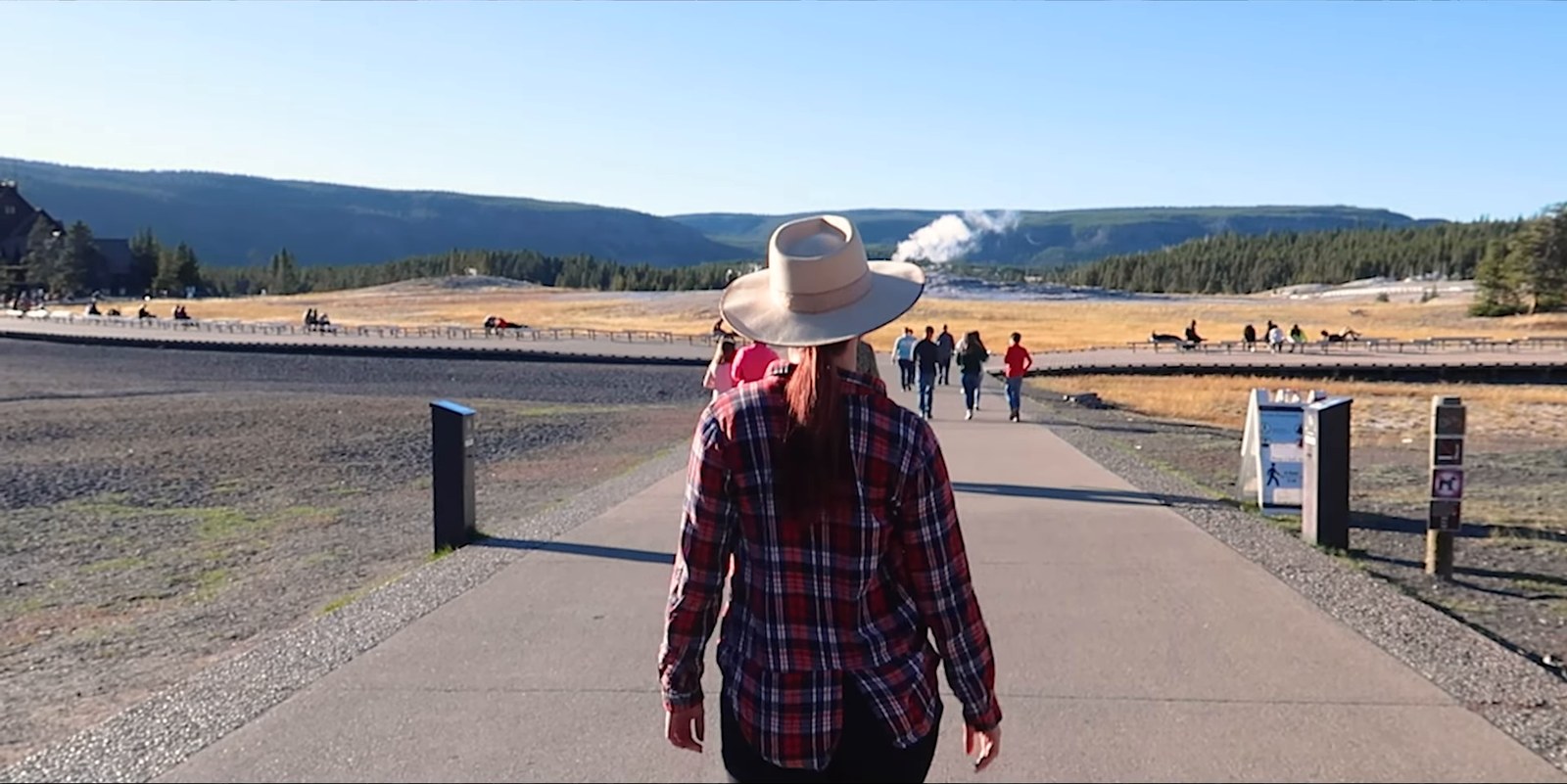
We saved Old Faithful for last. Its parking lot felt enormous, and a crowd had gathered around the prediction countdown. The geyser teased us while we waited; a prediction is a window, not a promise of an exact minute. The NPS geyser activity page is the place to look for eruption predictions when you visit. With a long drive ahead, we picked up barbecue sandwiches from Old Faithful Lodge, since dining in wasn’t an option on our visit, and ate in the van. Then we headed south toward Grand Teton and reached a KOA campsite pretty late, where we showered and went to sleep.
What living in the van changed
The campervan was most useful at lunchtime. We could stop at the Norris picnic area for something hot, make breakfast between stretches of wildlife watching, and eat lunch without going into a busy restaurant. During our September trip, we were wearing masks and trying to keep our distance from crowds, so having our food with us was particularly convenient.
The harder part was the cold. For the first stretch of the trip we had no power hookups, so no heater. After waking to snow we bought an electric heater, and the first night we had a hookup the van felt much toastier; it also meant we could use the microwave for popcorn. Later, at the West Yellowstone KOA, we had hookups and showers, both very welcome after those early starts. It was our first van trip, and we learned quickly how much difference a place to plug in could make.
What we’d take into another Yellowstone visit
We’d take the extra walk to Gibbon Falls’ lower overlook again, bring food for van lunches, and get up early if wolves were a priority. We would not count on an animal appearing just because we’d heard it might be nearby. We’d also leave room for traffic that turns out to be bison taking their time, and expect company at a stop as famous as Grand Prismatic.
Before driving this route yourself, check the NPS conditions page for road information that applies to your trip. Our conditions that trip included masks and few places to eat, and our three days weren’t a complete tour of Yellowstone, but they gave us a waterfall, mud pots, elk, wolves, a bear that never showed and a campervan full of lunch. We’d happily do it again.
Image credits: the photo of Old Faithful erupting used as the featured image is by Dietmar Rabich, licensed CC BY-SA 4.0, via Wikimedia Commons (source). We resized it from the original and made no other changes. That photo was not taken on our trip. The other photos are stills from our own videos of Yellowstone.
