In September 2024, Kevin and I spent eight nights driving a loop around Scotland in a small motorhome we picked up near Edinburgh Airport: north to Pitlochry, across to the castles of the east coast, through whisky country to Loch Ness, out to Eilean Donan and the Isle of Skye, and back south through Glencoe to Edinburgh. This is that route, written so you can copy it or bend it, plus what living in a campervan in Scotland was actually like, because that part decides whether this kind of trip is for you.
The campervan was provided by Just Go, the rental company we picked it up from, and we said so in our videos at the time. Everything in this article is our own experience and opinion. I haven’t quoted prices anywhere, because every fee we paid in 2024 has probably changed.
This site may contain affiliate links to products. We may receive a commission for purchases made through these links, at no cost to you
The short answer
Our route was a loop of roughly nine days in five stages. These are the places we actually stopped and, where our videos show it, where we slept:
| Stage | Our main stops | Where we slept |
| 1. Edinburgh Airport to Pitlochry | Van pick-up, a big grocery shop, coffee in Stirling, dinner in Pitlochry | A campsite about five minutes from Pitlochry |
| 2. Highland cows and the east coast | A Highland cow tour near Blairgowrie, Dunnottar Castle, Craigievar Castle, New Slains Castle | A caravan park near the coast, booked online |
| 3. Whisky country to Loch Ness | A tasting stop at Cardhu on the Malt Whisky Trail, Urquhart Castle, Fort Augustus | A caravan park near Urquhart Castle |
| 4. Eilean Donan and the Isle of Skye | Eilean Donan Castle, Portree, Kilt Rock, the Quiraing, Lealt Falls, Sligachan | Two nights at a campsite near Sligachan |
| 5. South through Glencoe to Edinburgh | Afternoon tea at Glengarry Castle Hotel in Invergarry, the drive through Glencoe, returning the van | Our videos don’t show these last nights |
- This route suits you if you want castles, Highland scenery and Skye in one loop without packing and unpacking every day, and you are happy to drive a vehicle bigger than your car on narrow roads.
- Think twice if you have never driven on the left and the idea of a big van on a single-track road makes you anxious, or if you want to spend most of your time in cities.
- The one thing we’d change: more time on Skye. We had two nights there, and the weather took away about half of what we wanted to do.
Before the route: is a campervan right for you?
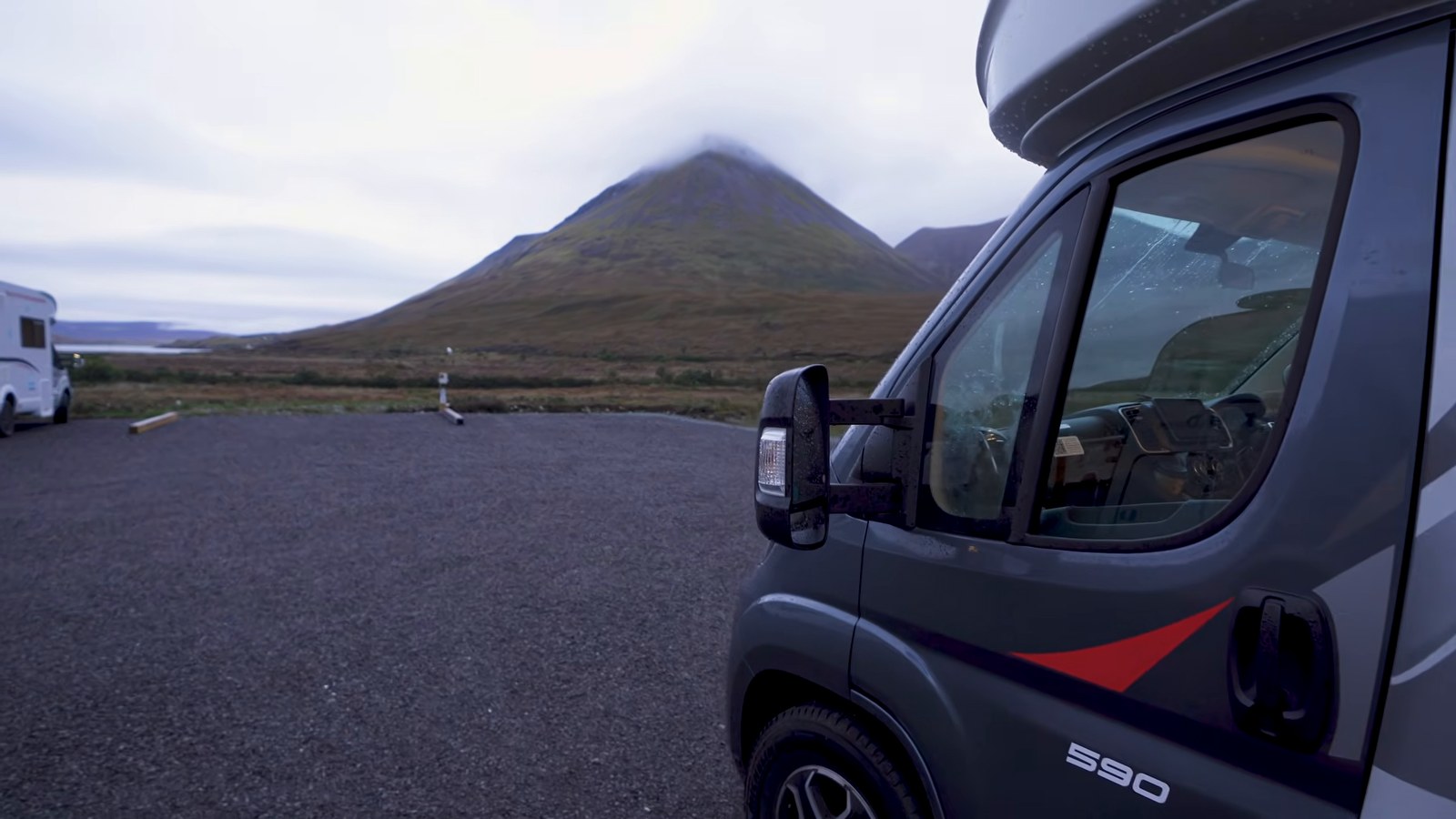
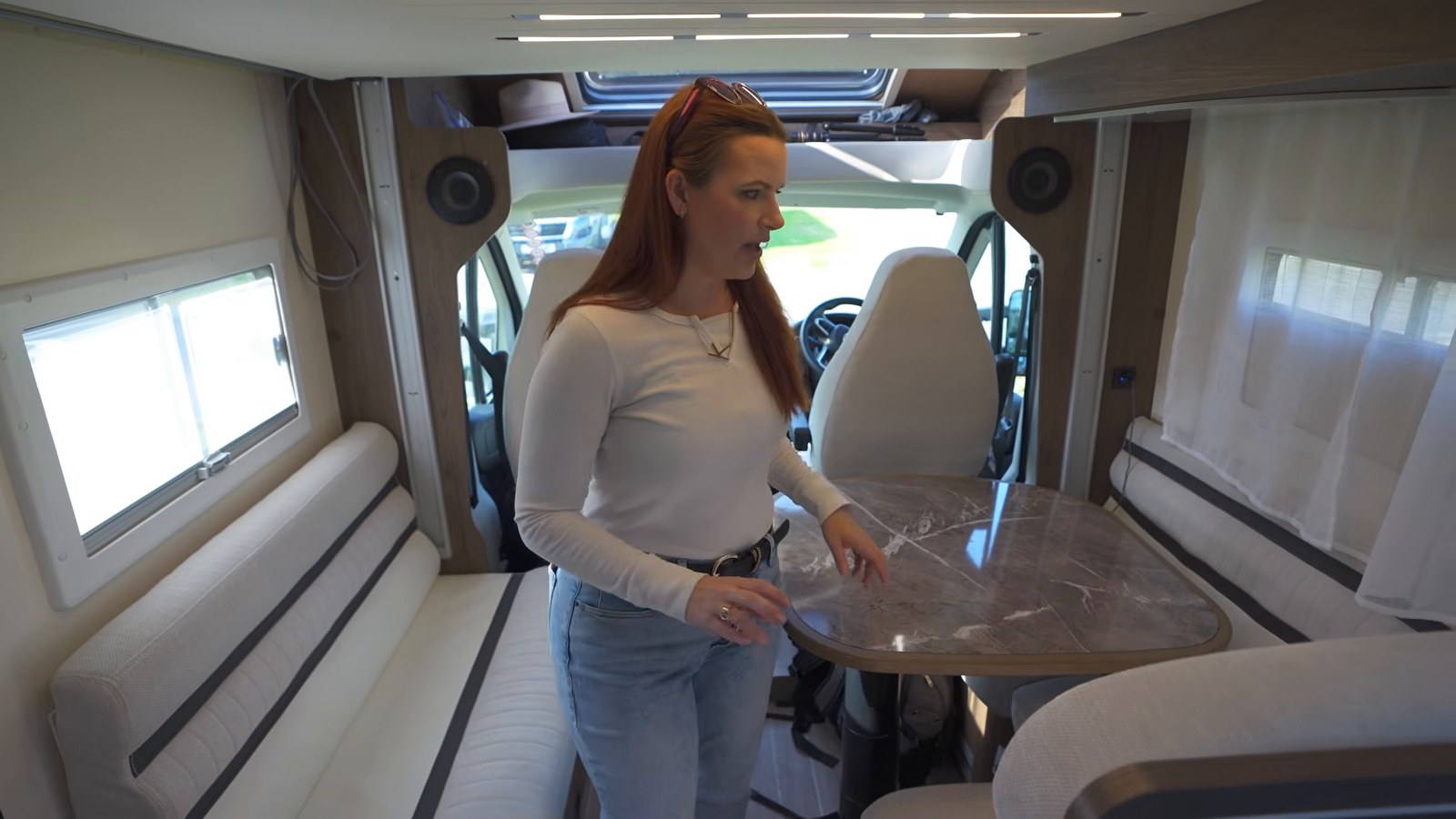
Ours was more of a small motorhome than a van: a Roller Team T-Line on a Fiat diesel base, with a proper bathroom and a bed that drops down from the ceiling. In the US it would count as a motorhome, and we said on camera that there are no motorhomes in the US this small and compact. It can sleep four, but it felt like a perfect fit for two of us.
Here is what I’d want to know before booking one:
- Get an automatic if you can. Ours was an automatic, which mattered: Kevin is the only one of us who can drive a manual, so with a stick shift he’d have done every mile.
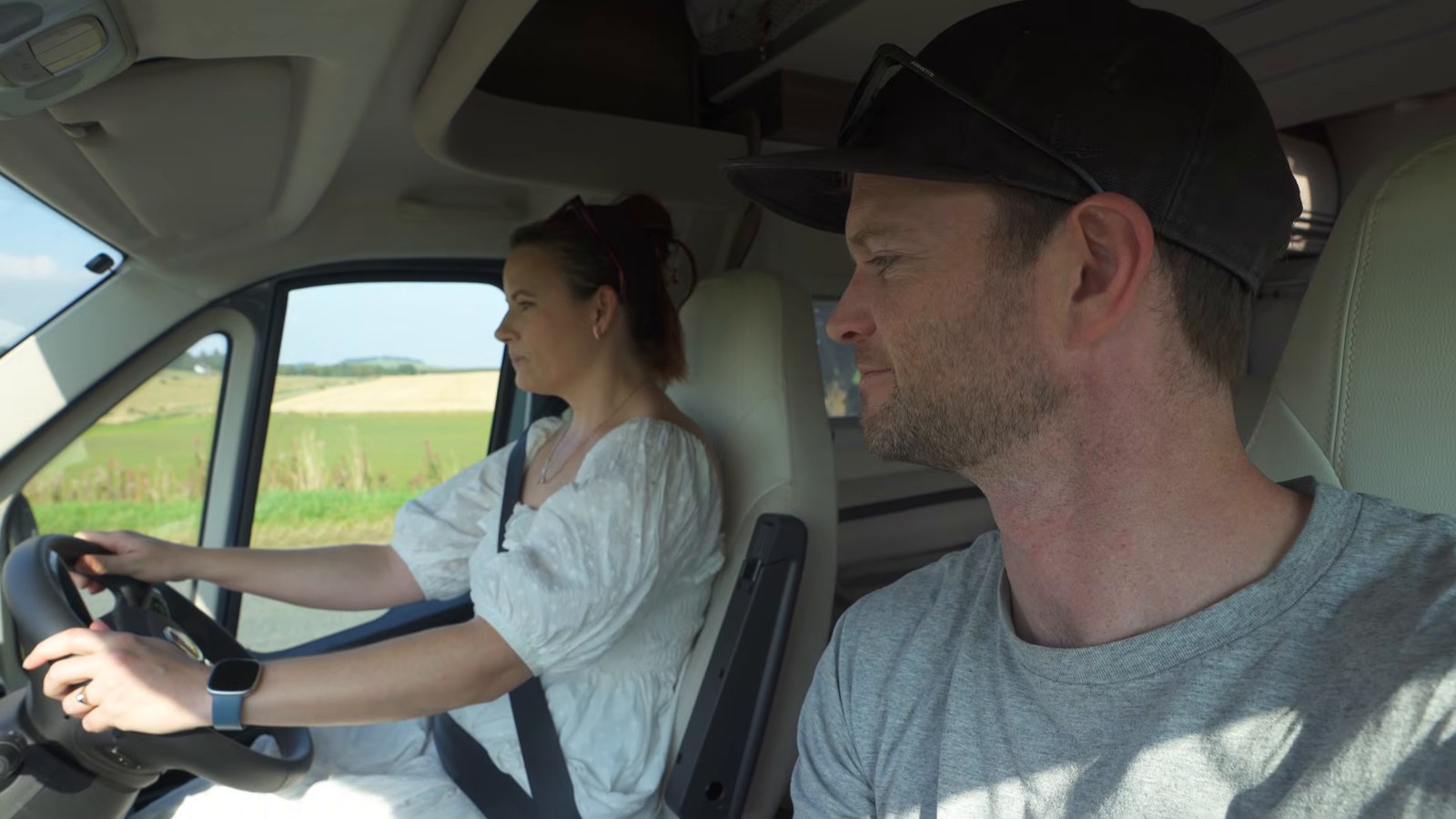
- Driving on the left in a big vehicle is nerve-racking at first. Kevin drove us out of the rental lot saying it was huge and he was just trying not to hit anything. After a couple of days he said he’d got used to it. I drove for the first time on the east coast, about ten miles to Craigievar Castle, and we made it. We had taken good insurance on the van, which helped with the nerves.
- The roads are small and the parking is smaller. At the Highland cow farm we parked up the road because the lanes were so narrow, and in towns the parking spaces and turnarounds are tight. On Skye, the road up to the Quiraing was a really scary drive in a big camper (more on that below).
- Single-track roads have rules. Many Highland roads are only wide enough for one vehicle, with passing places. The Highway Code (rule 155) says to pull into a passing place on your left, or wait opposite one on your right, when someone is coming towards you or wants to overtake, and to give way to vehicles coming uphill when you can.
- Pack soft bags. We brought big packs and suitcases and immediately wondered where they would go. They ended up in the outside storage locker, and our clothes went into the cupboards.
If you are still deciding, compare the idea with seeing Scotland without a car, which is a very different trip.
Stage 1: Edinburgh Airport to Stirling and Pitlochry
We picked the van up at Just Go’s base near Edinburgh Airport. They gave us a quick tour of how everything works, which we tried our best to remember, and then they just let us drive away. Jet lag was real: by mid-afternoon we needed coffee badly.
Do the grocery shop first. With eight nights ahead of us, our first stop was a supermarket for breakfast things, coffee and easy dinners. Having a fridge meant we could simply load it all straight in.
Stirling. Kevin wanted Stirling for the castle and the Wallace Monument, and I wanted it for the coffee. We had coffee and cake at the cafe in the Stirling Smith Art Gallery, which is owned by a friend Kevin knows through his other channel, and then walked through the King’s Knot, the old royal gardens below Stirling Castle that are now a green space where people walk their dogs.
Pitlochry. We carried on north and reached Pitlochry in beautiful evening light. It is so cute that it became one of our favorite towns of the trip. We had dinner at a pub in town and got to our campsite, about five minutes away, after dark.
Stage 2: Highland cows and the east-coast castles
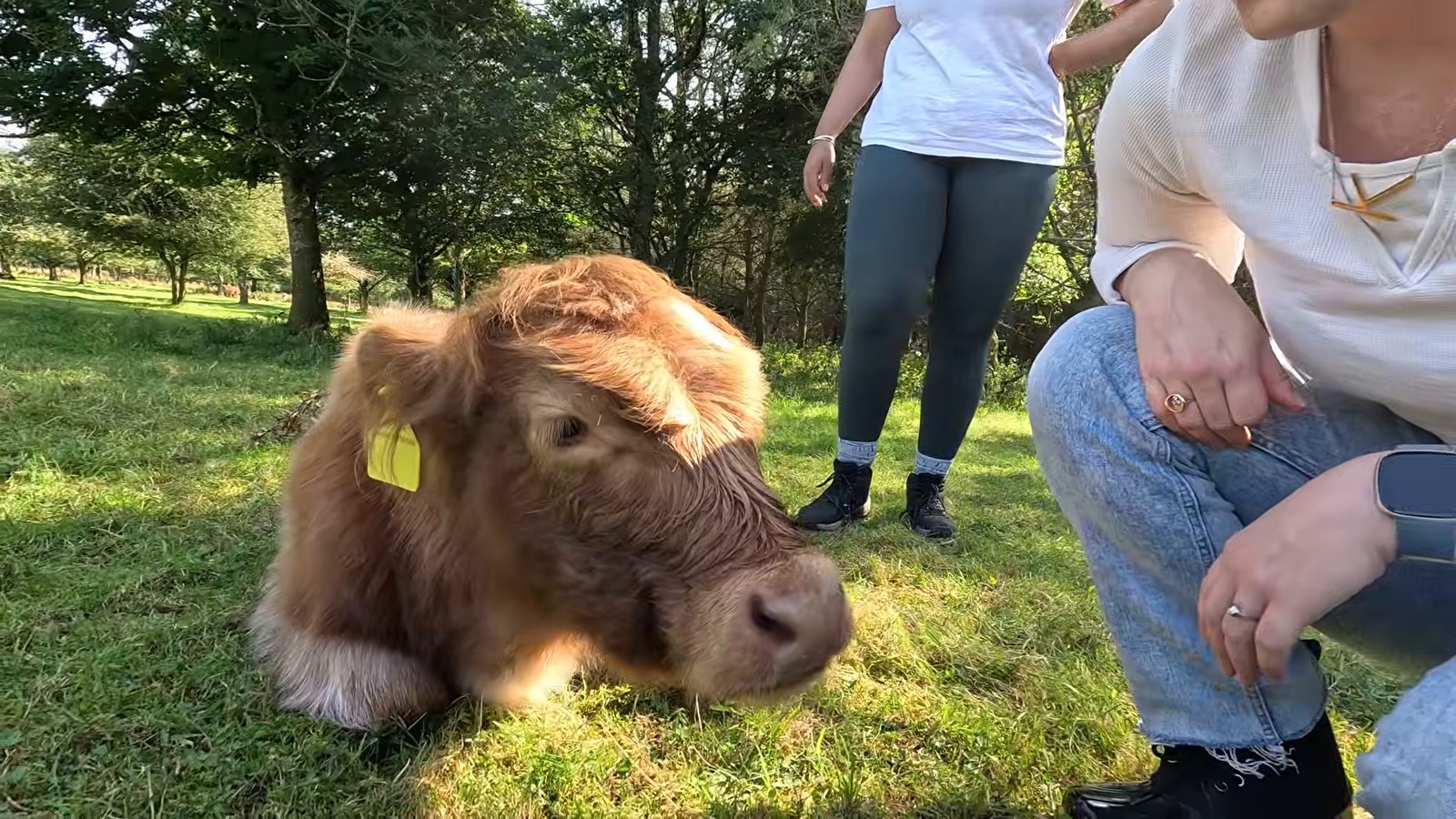
The Highland cow tour. I really wanted to see Highland cows up close, and we found a farm that takes you out into the fields with them: Bowland Trails, near Blairgowrie. We paid for the tour, and it was a highlight of the whole trip. Mary, who owns the farm and calls herself the crazy cow lady, drove us around on an ATV with only one other couple, so there were four of us in total. She told us the cows’ names and stories and encouraged us to brush them, scratch them and hug them. It was clear the cows are well looked after, which matters to me with any animal experience. It was supposed to take about an hour and a half, and it took two and a half hours. Booking is required.
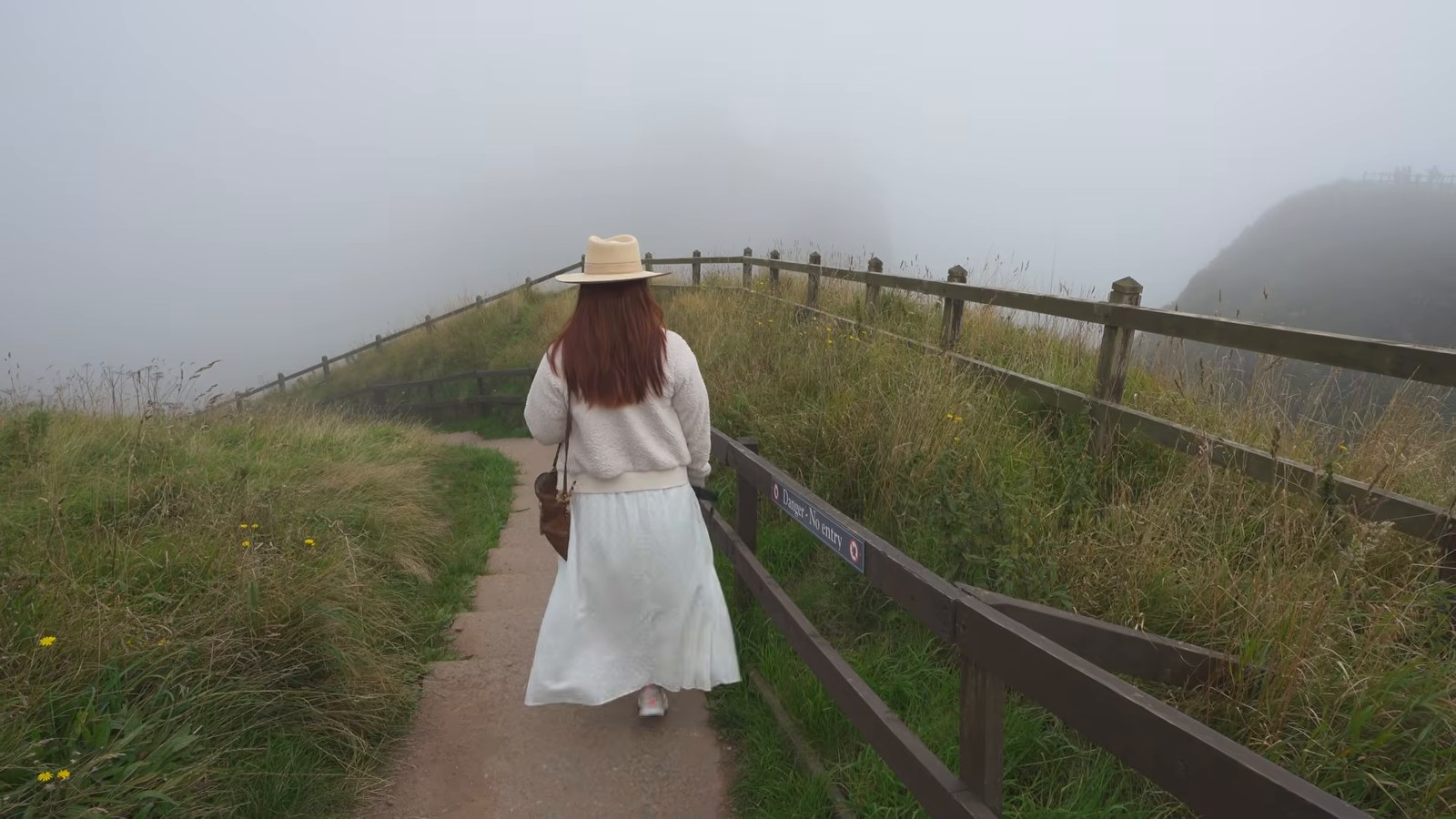
Dunnottar Castle. Photos of Dunnottar, a castle ruin on a dramatic stretch of coast, were the inspiration for planning this whole road trip. When we arrived, it was completely fogged in. We grabbed a quick lunch at the little outdoor cafe by the entrance, walked down towards the castle, caught the faintest outline of it, and decided not to pay to go in when we couldn’t see anything. The forecast showed the cloud staying for days, so we moved on. Sometimes travel doesn’t meet your expectations. Have a backup plan for the coast.
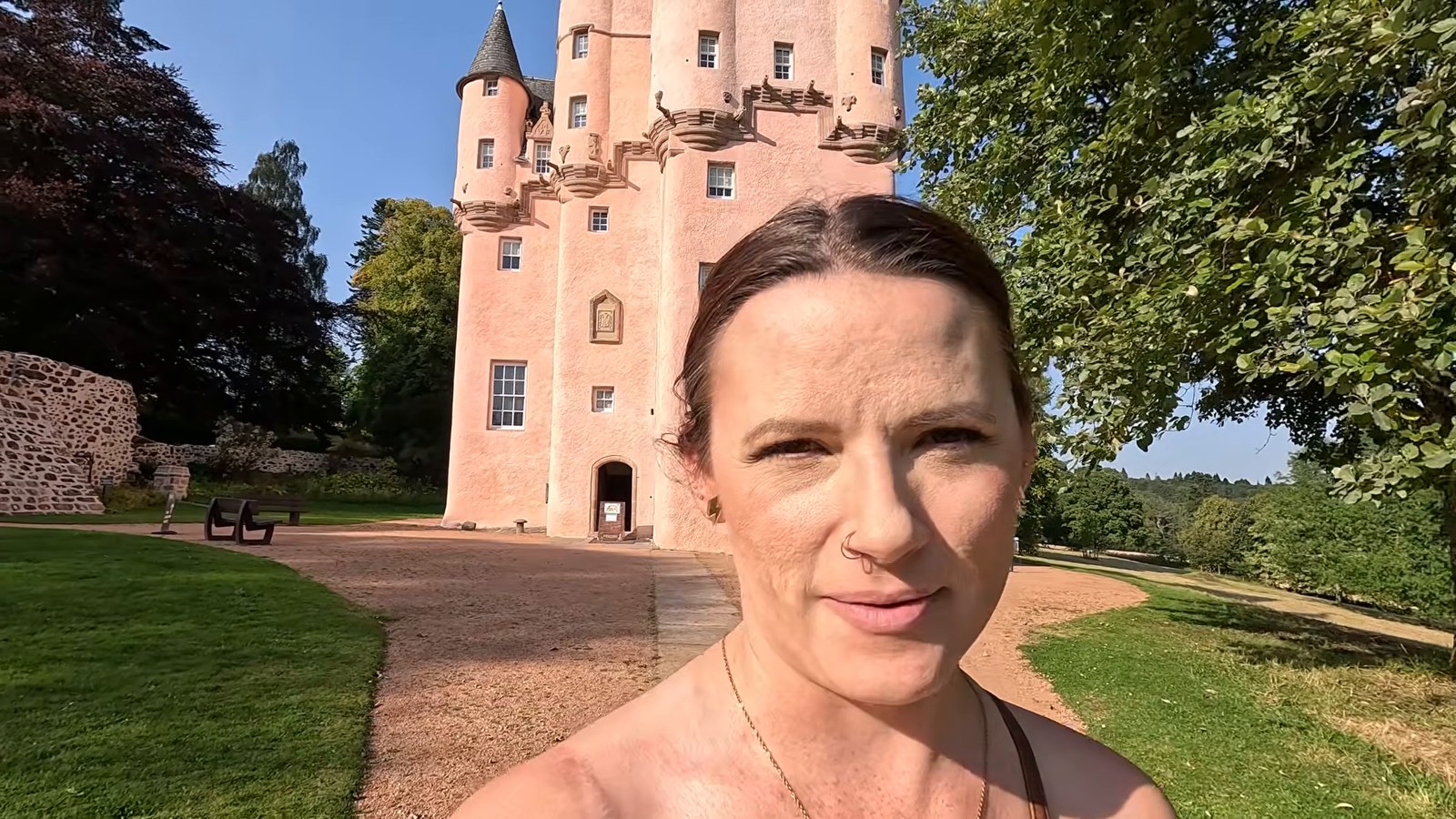
Craigievar Castle. Our backup was inland, out of the fog: Craigievar, the pink castle. It has a big car park with a fee. We arrived too late in the day and the tours were full, so we didn’t go inside, but for me, being at a pink castle was enough. Check the National Trust for Scotland’s current tour arrangements before you go if you want to see the interior.
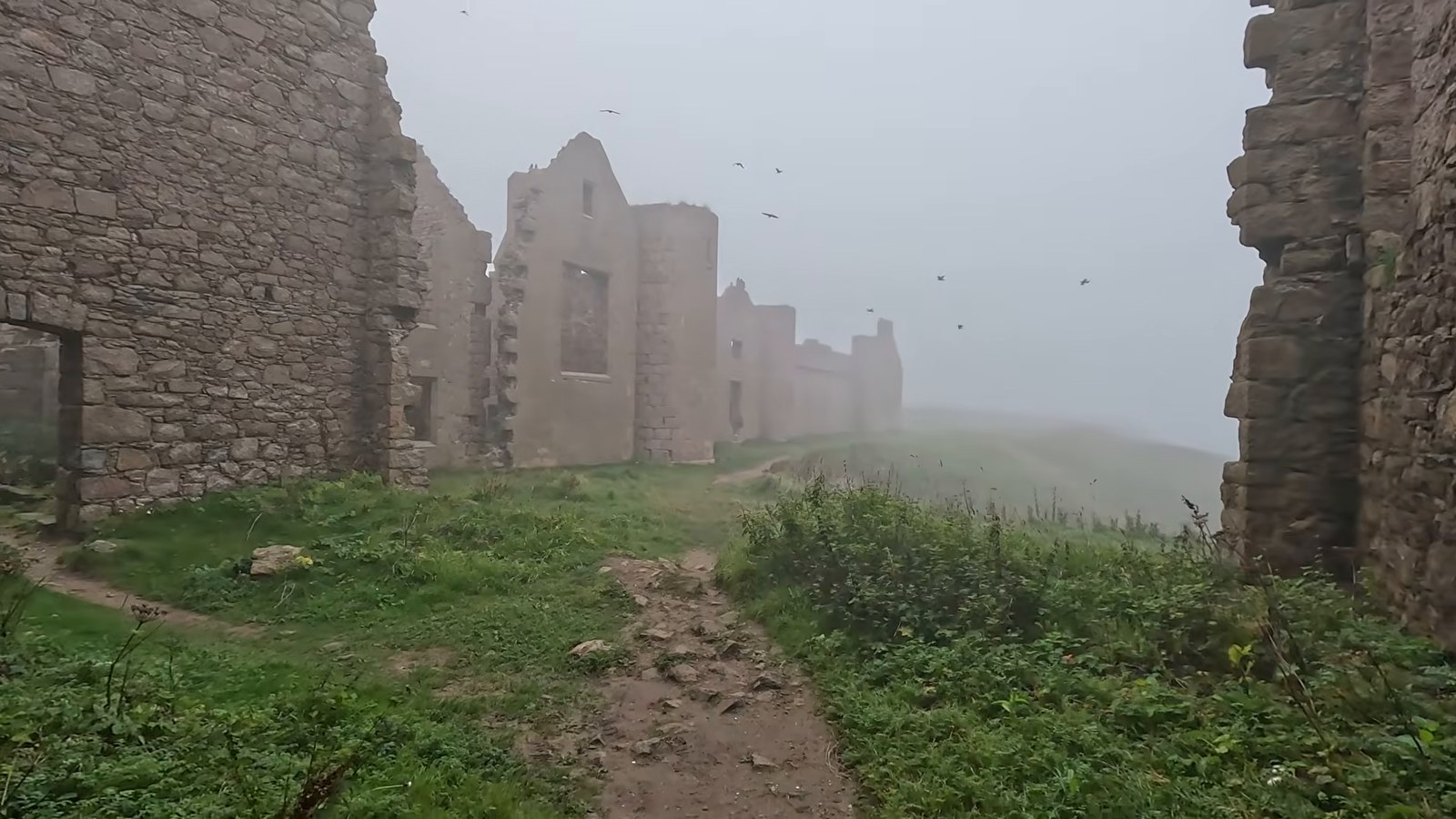
New Slains Castle. Back on the coast, and back in the fog, is New Slains, the cliff-top ruin that is said to have inspired Bram Stoker’s Dracula. I was feeling tired and stayed back, so Kevin walked out alone. With the fog, the ravens and the cliff edge right beside the path, it was properly eerie.
The booking lesson. Kevin couldn’t stay long at Slains, because it was a Saturday and we’d been worried about finding a spot, so we had booked a caravan park online, and it had a check-in deadline in the evening that we had to race to meet. If your route puts you somewhere popular on a weekend, book that night ahead.
Stage 3: The Malt Whisky Trail to Loch Ness
The next morning was grey and rainy, so we skipped going back to Slains and headed into the Highlands.
A whisky tasting at Cardhu. On a crappy, dreary day, we did the most Scottish thing we could think of and went whisky tasting on the Malt Whisky Trail. We picked Cardhu. The official tastings were booked up for the day, but the gift shop offered a couple of free samples, so we tasted a 12-year-old and a 15-year-old and were much warmer afterwards. If you want a full tour and tasting, book ahead.
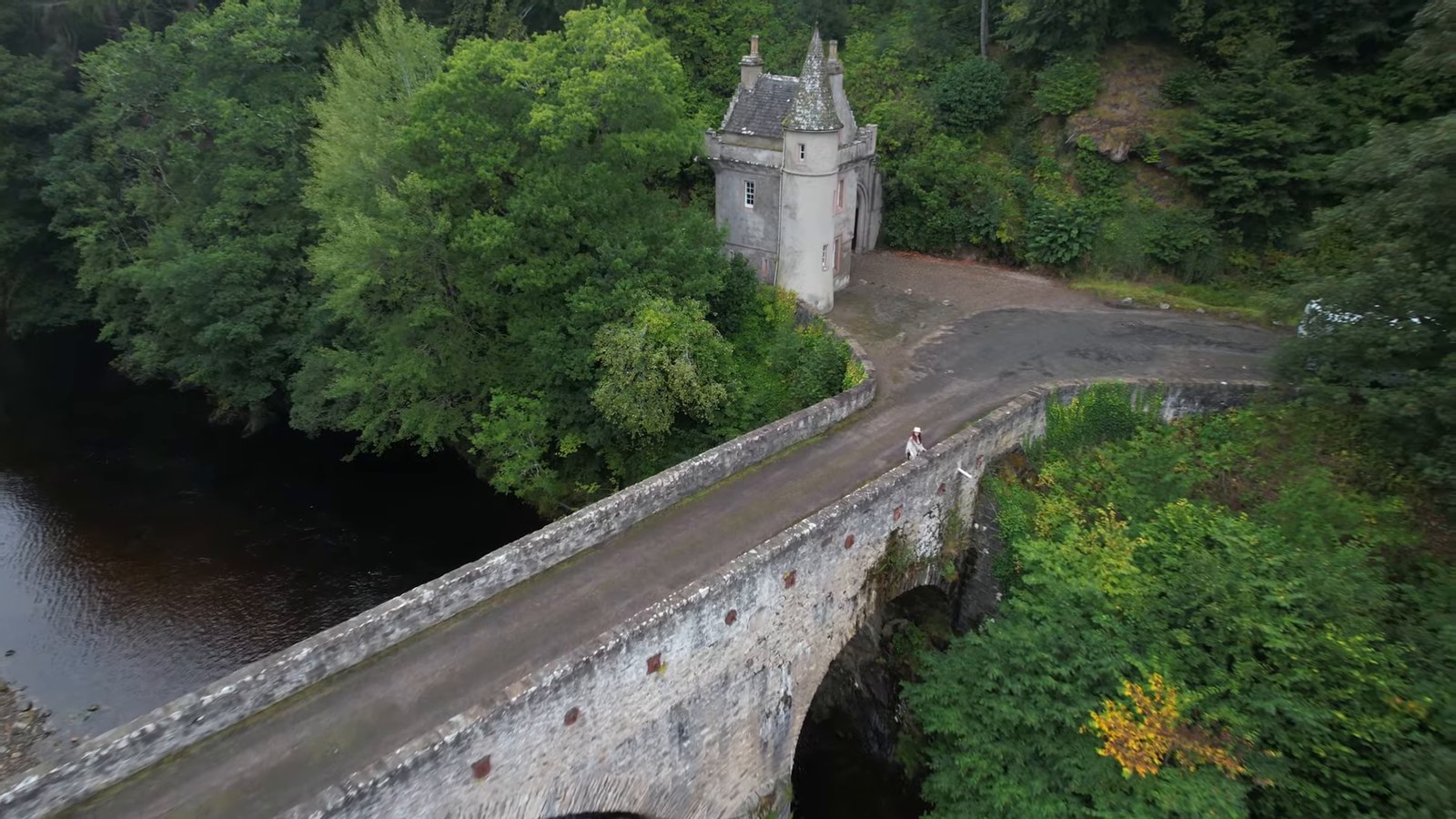
Lunch in the van. One of the best things about a campervan is that your kitchen comes with you. We heated up the leftovers from the night before, and later stopped on a whim at a little bridge and an estate entrance that looked like a mini castle. Some of the best road-trip stops are the ones you don’t plan.
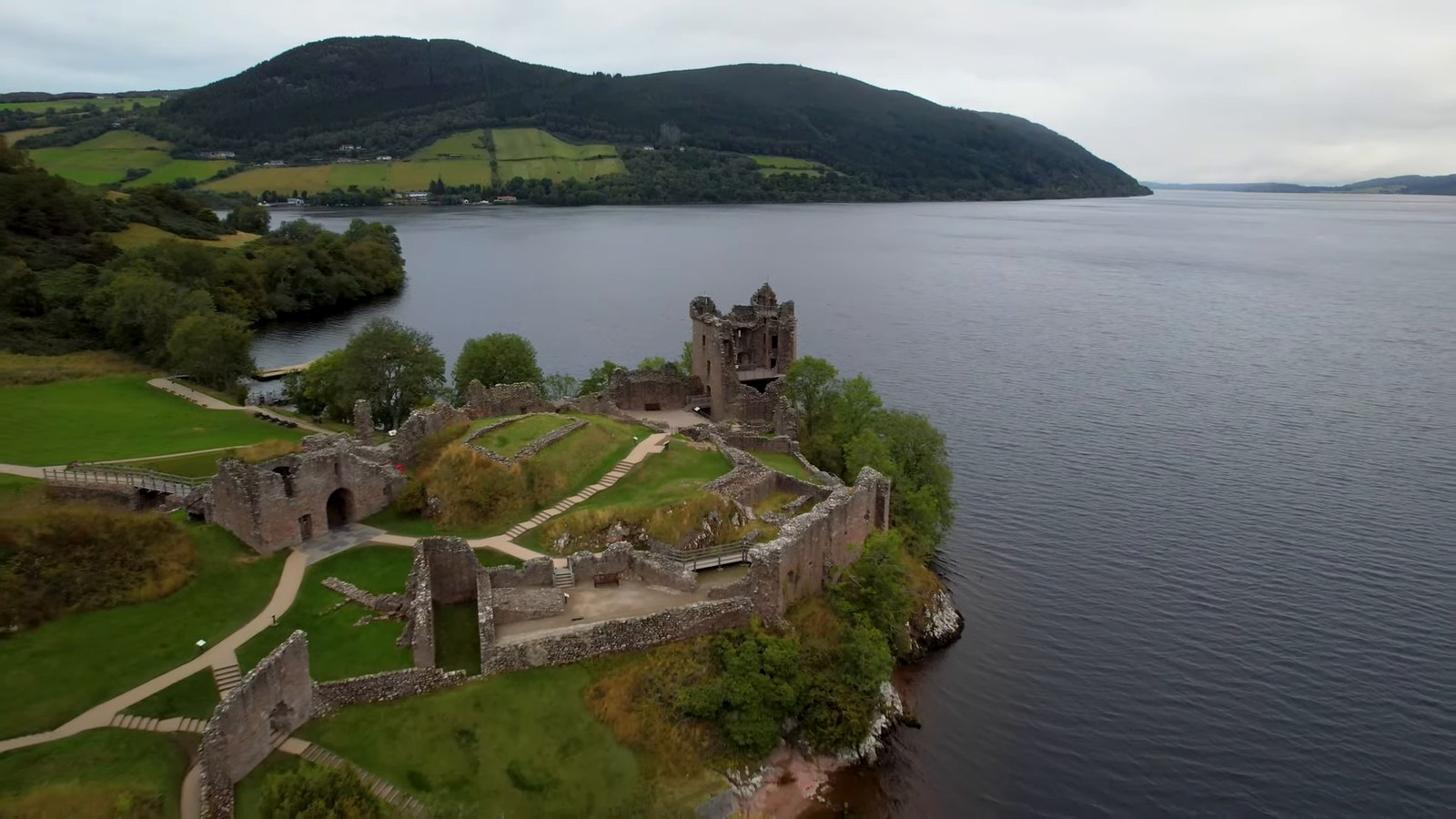
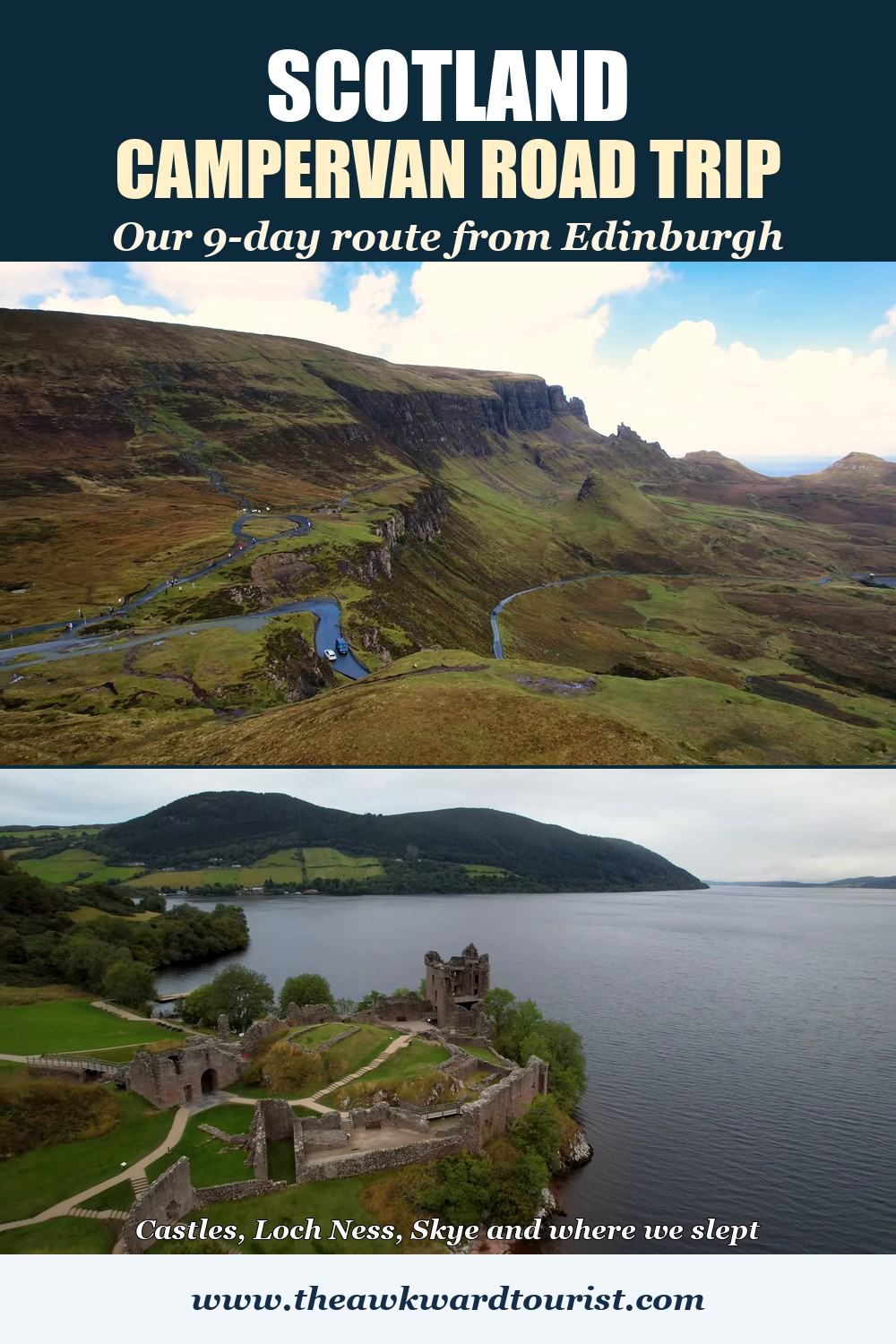
Urquhart Castle. By the time we got to Loch Ness, Urquhart Castle had closed for the day, so we camped nearby and came back the next morning before it opened. This is where a campervan pays off: we parked, made egg sandwiches and coffee in the van, and watched the car park fill up. It was almost full by about 10 a.m. on a Monday. This was the one castle we paid to go inside, and it was very busy, with lots of tour buses. There’s a gift shop with a small theater, a full-sized trebuchet, and a lot of stairs; there are lifts and ramps to get you close, but going through the castle itself could be hard if you have trouble with mobility. Our one regret is that we didn’t walk down to the castle as soon as it opened, before the crowds. Historic Environment Scotland sells tickets for Urquhart Castle online.
Fort Augustus. We used the Park4Night app to find somewhere to park in Fort Augustus, at the southern end of Loch Ness, and had lunch at a pub beside the canal locks. We split what we called on camera the largest piece of fish we’d ever seen, and the verdict, from someone who isn’t even a big fish and chips fan, was probably the best fish and chips ever.
Stage 4: Eilean Donan and two nights on the Isle of Skye
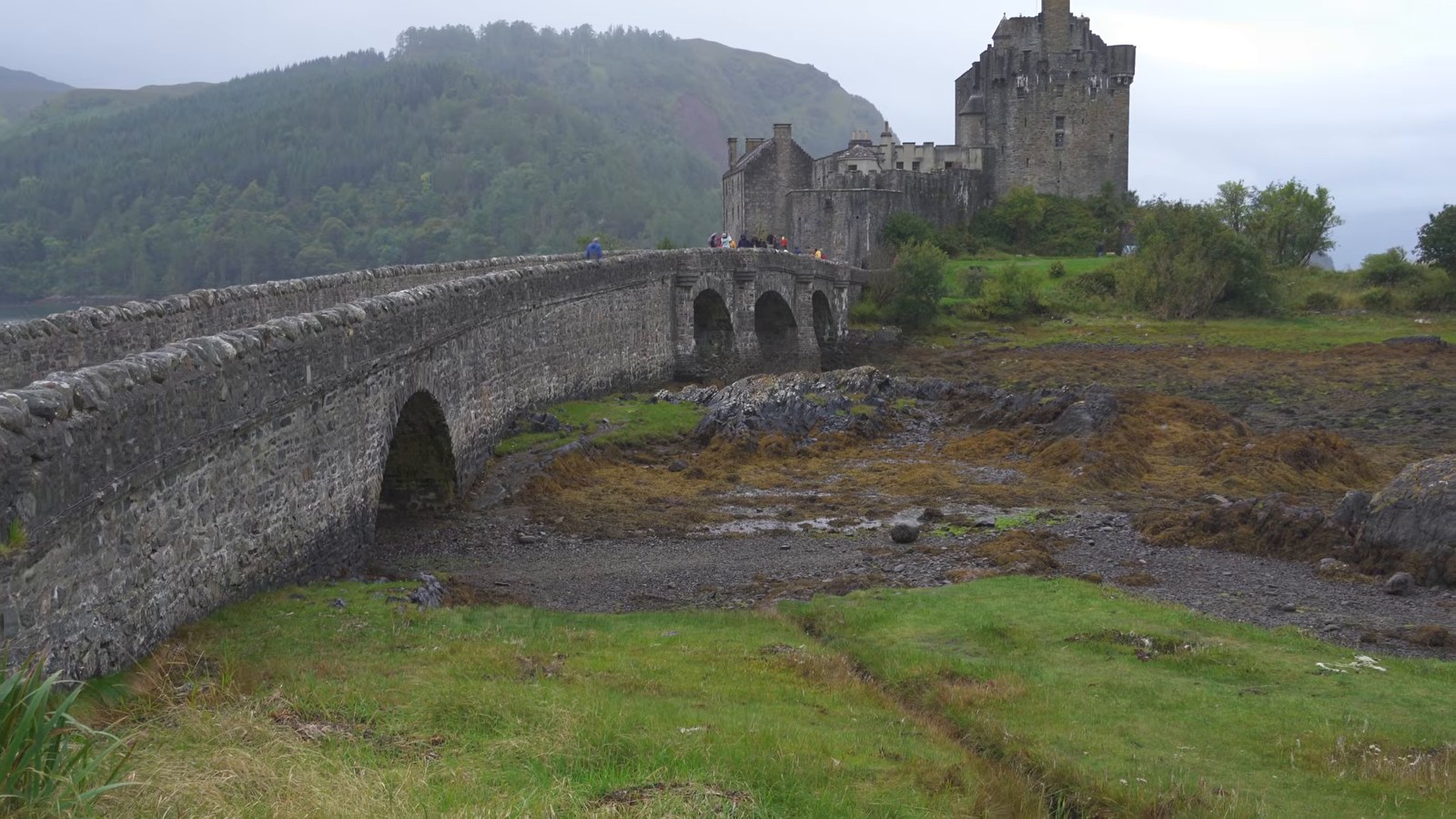
Eilean Donan Castle. On the way to Skye, we stopped at Eilean Donan, the castle on a little island joined to the shore by a bridge. The car park is big enough for campervans, and there’s a fee. In 2024 we chose the cheaper ticket that let us walk across the bridge and around the outside rather than going inside. We expected a 20- to 30-minute stop, and we stayed about two hours. It was probably our favorite castle of the trip. The castle’s own website says admission tickets can only be bought on site, on the day, and that rucksacks and large bags aren’t allowed inside, so leave your daypack in the van.
Our base: Sligachan. We crossed the bridge onto Skye and stayed two nights at a campsite just south of Sligachan,. It rained all that first night, and the wind was strong enough to rock the van. We stayed in with grilled cheese and tomato soup.
Portree. The next morning we drove to Portree, the colorful harbor town. The sun came out, then it hailed so suddenly that we ran into the co-op for shelter, and five minutes later it was sunny again. There’s a big car park close to the middle of town with a fee for a couple of hours, which is worth paying when you’re in a campervan. Kevin finally found the meat pie he’d been looking for all trip and chose haggis; the verdict was that it tastes a bit like corned beef hash.
Kilt Rock. About half an hour north of Portree, Kilt Rock has dramatic cliffs and a waterfall, which we expected to be full after all the rain. There’s a big car park. The wind was howling and it felt close to freezing, so this was a quick stop.
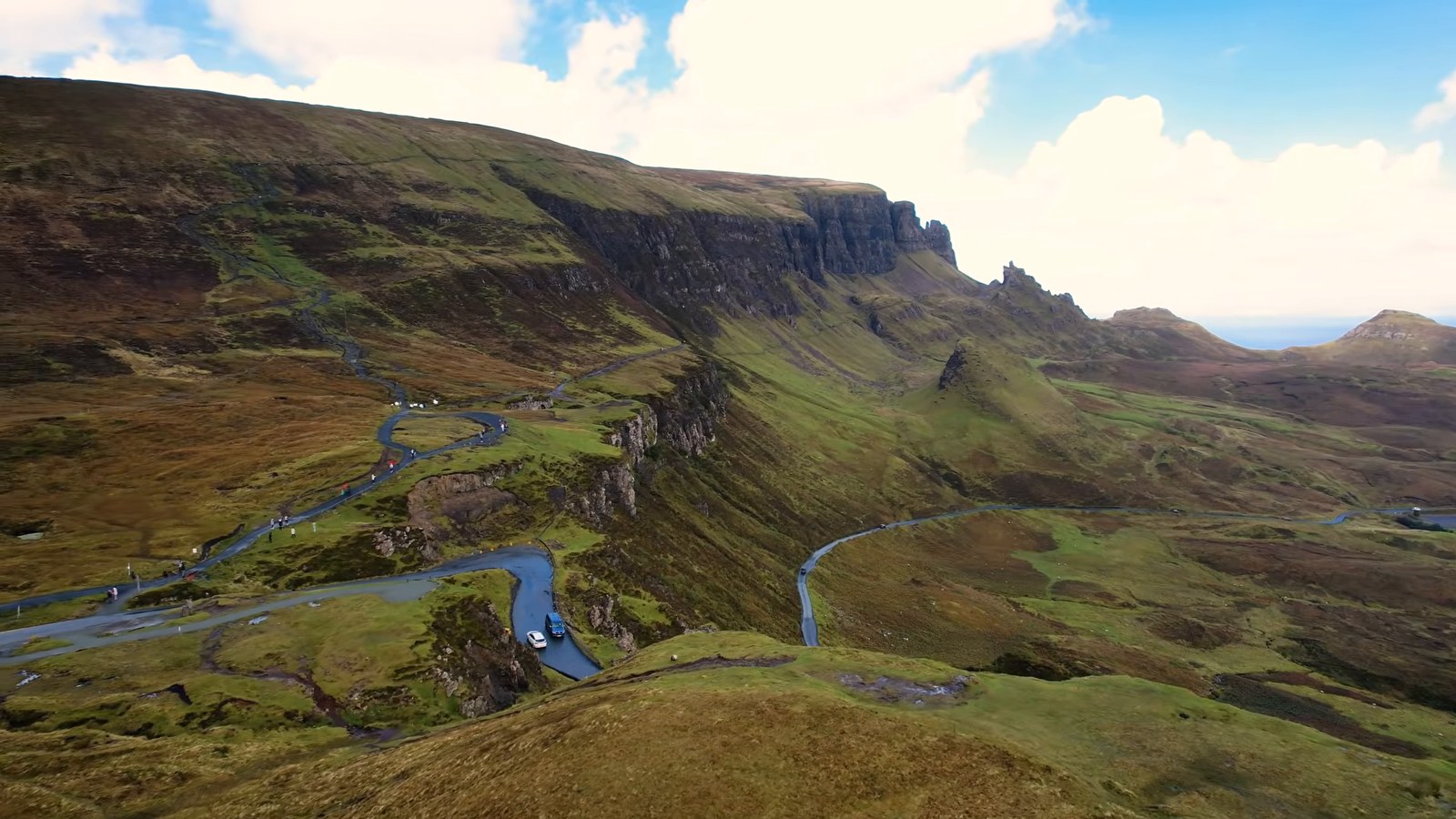
The Quiraing, and the road up to it. I’m not sure driving a big motorhome up to the Quiraing was our best idea. The road is narrow, and when a tractor came towards us there was no way to turn around; there were also some big potholes on a very popular tourist route. At the top, a storm cloud rolled in and it hailed sideways. The good thing about a campervan is that you can just stop and make a coffee, so we did. The weather was too rough for the loop walk, so we only walked to a viewpoint near the car park. On a nicer day we would do that hike. If you are nervous about the road, take it slowly and use the passing places.
Lealt Falls. On the way back south we stopped at Lealt Falls, which has a small viewing platform and, when we were there, no parking fee. Five or ten minutes is enough.
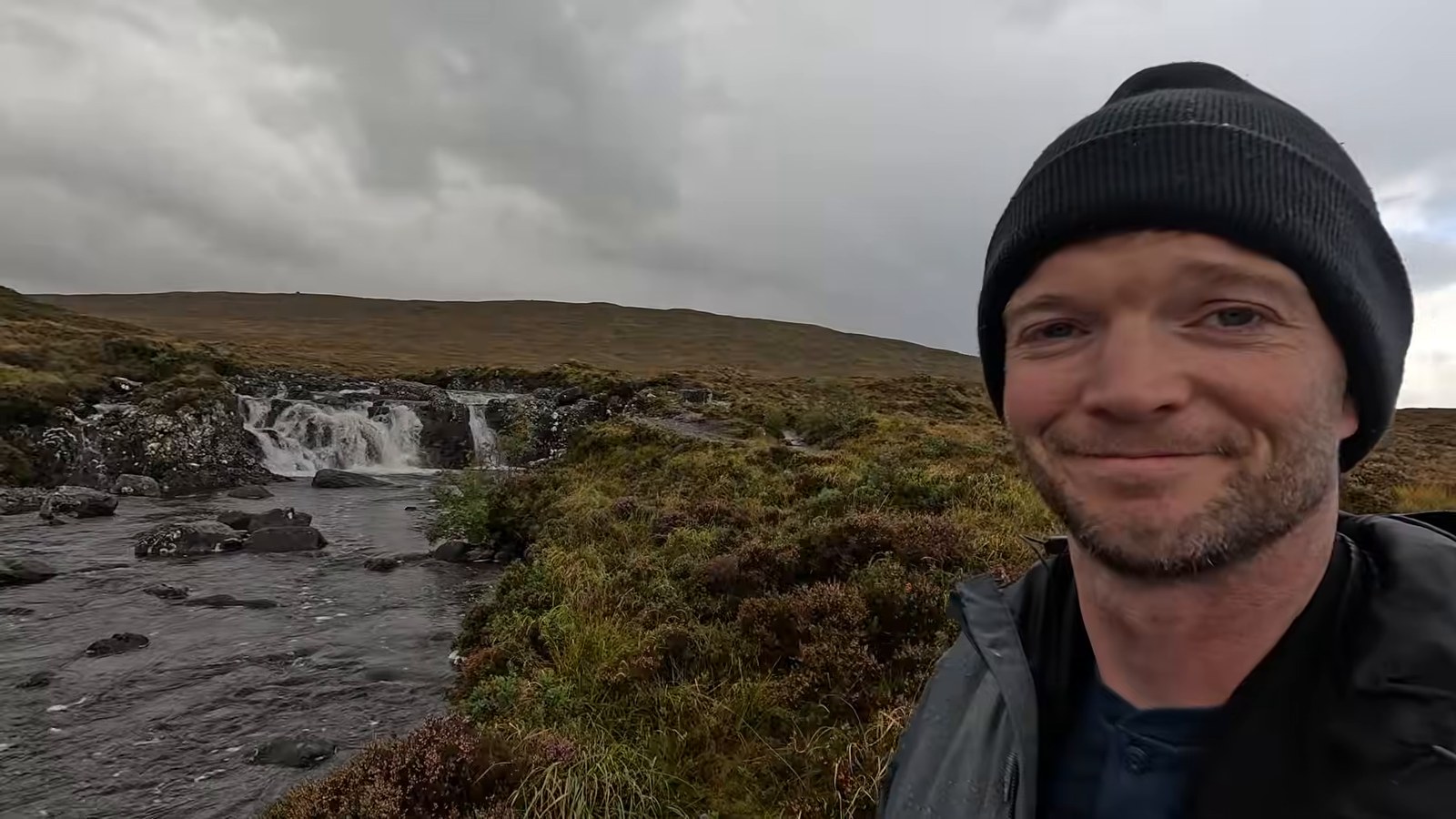
What we skipped on Skye. We called it a 50 percent successful day. We skipped the Old Man of Storr hike because of the weather, though you can see the rock from the road. We also decided against the Fairy Pools, because we’d heard the trail gets very muddy after rain and the famous clear water turns murky. Instead, Kevin walked to the waterfalls at Sligachan, about ten minutes from our campsite, and further up to a small waterfall behind a white cottage, where he was the only person there. Even with the weather, Skye had the most beautiful landscape of our trip, and you could easily spend more time there than we did.
Affiliate note: this is an affiliate link. If you book through it, I may earn a small commission at no extra cost to you. If you’d rather let someone else drive the Skye roads for a day, you can browse Isle of Skye tours on GetYourGuide.
Stage 5: South through Glencoe and back to Edinburgh
Invergarry. Heading south from Skye, we stopped in Invergarry because Kevin wanted to see a castle ruin, and discovered that the Glengarry Castle Hotel, whose grounds hold the ruin of Invergarry Castle, served afternoon tea. We hadn’t had one yet in Scotland, which felt like a travesty, so we dressed up and had scones, shortbread and sponge cake on a little tiered tray (with coffee, I’ll admit). Check with the hotel before you plan around it.
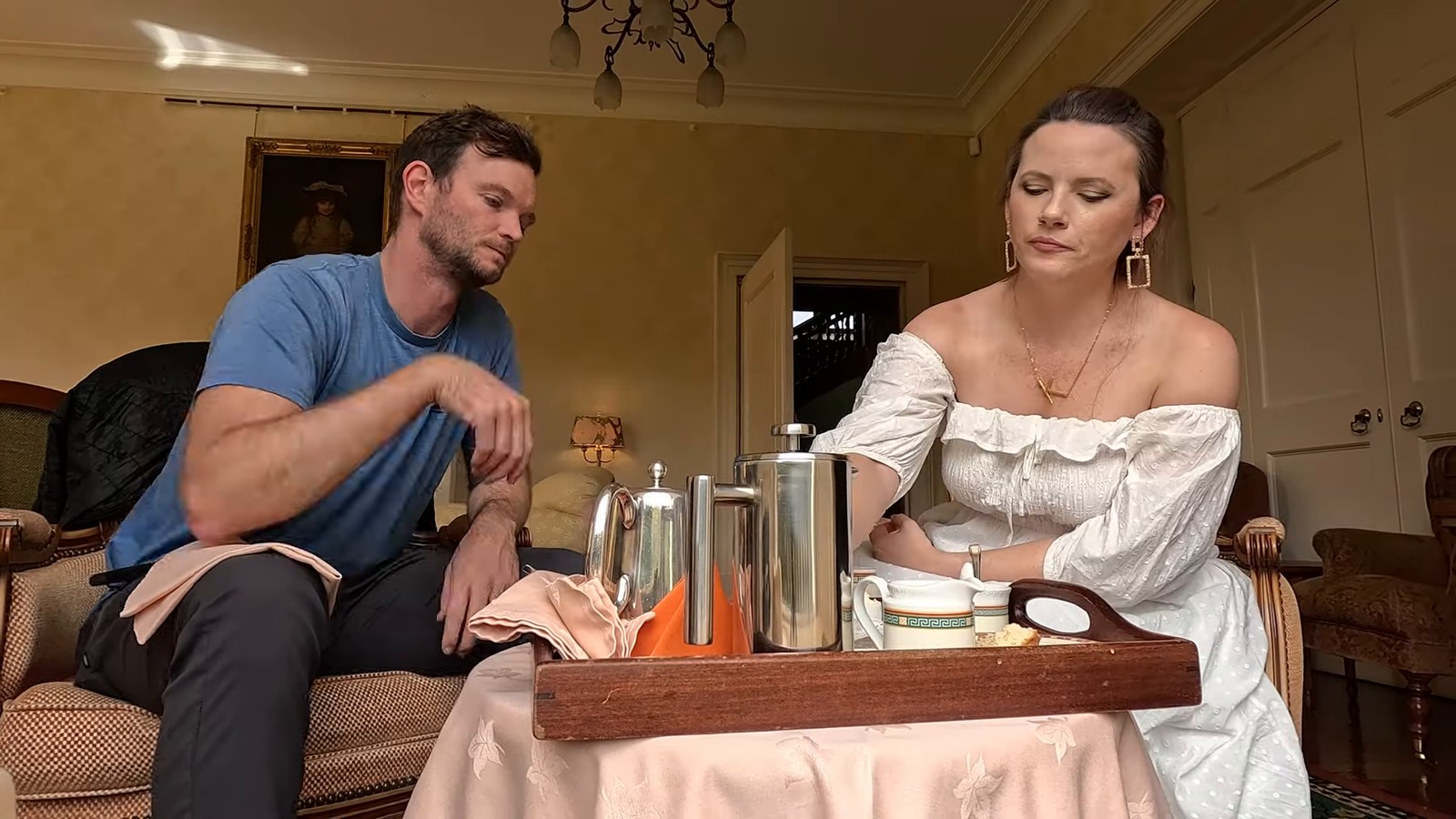
Glencoe. The drive south through the Highlands, especially around Glencoe, had some of the most picturesque scenery we saw in Scotland. Then we made our way back to Edinburgh to return the van.
Living in the van: what worked and what didn’t
This was our third campervan rental, and the first with a bathroom. That was my favorite part.
-
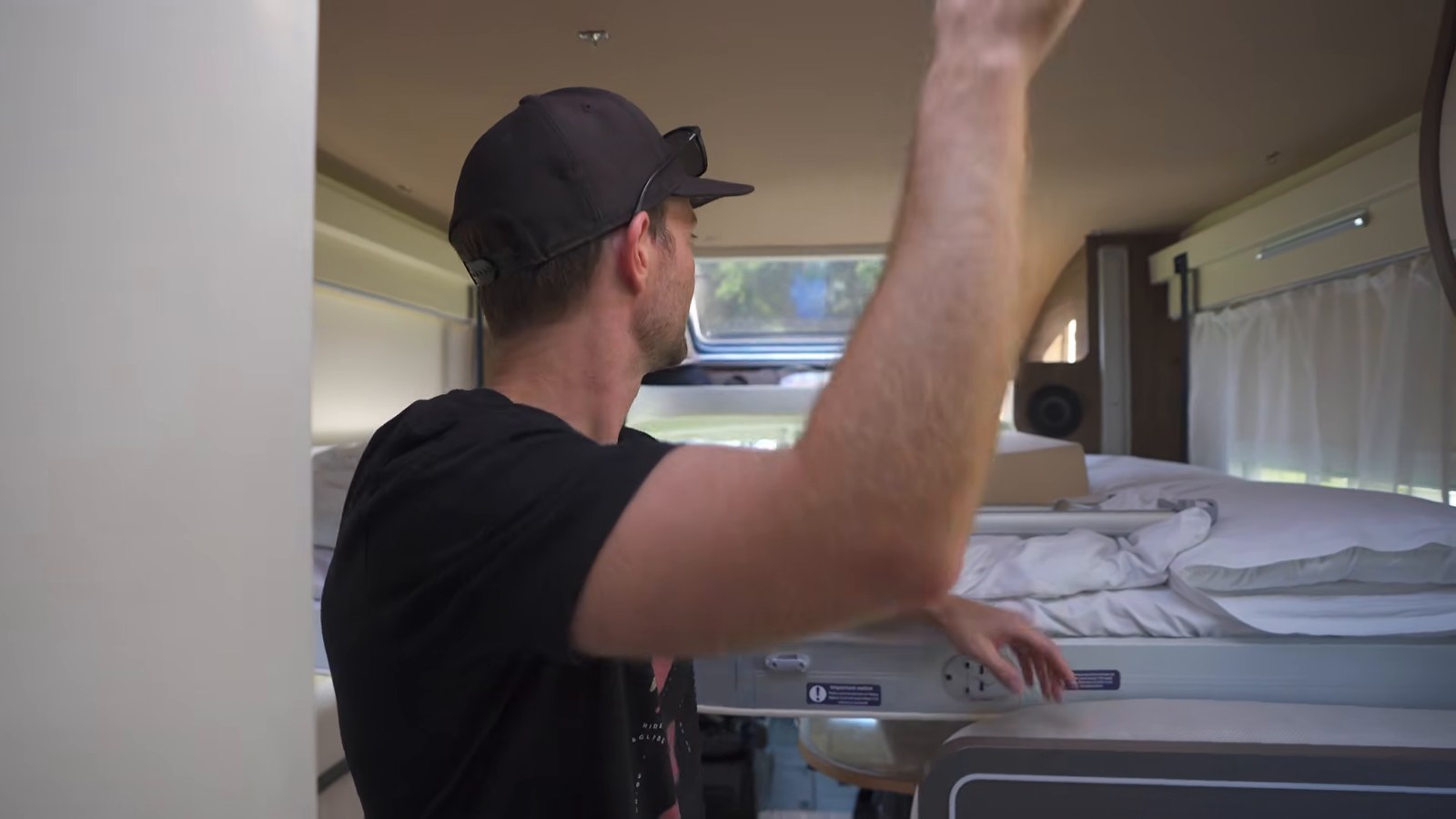
- The bed. Kevin’s favorite feature was the double bed that comes down from the ceiling at the press of a button. In our earlier vans we had to build the bed every night, which was a pain. The dinette also turns into a second bed if there are four of you. We slept well.
- The bathroom. A small but functional shower, a sink and a cassette toilet that you empty from a hatch outside. The shower was a little small, as you’d expect in a camper, but not bad.
- The kitchen. A three-burner gas hob, a tiny oven and a surprisingly big fridge with a freezer. The kitchen kit came with the rental: cups, plates, pots, a cutting board, a teapot and even a toaster. Every cupboard latches shut, and before you drive off you have to secure everything, because it all moves around.
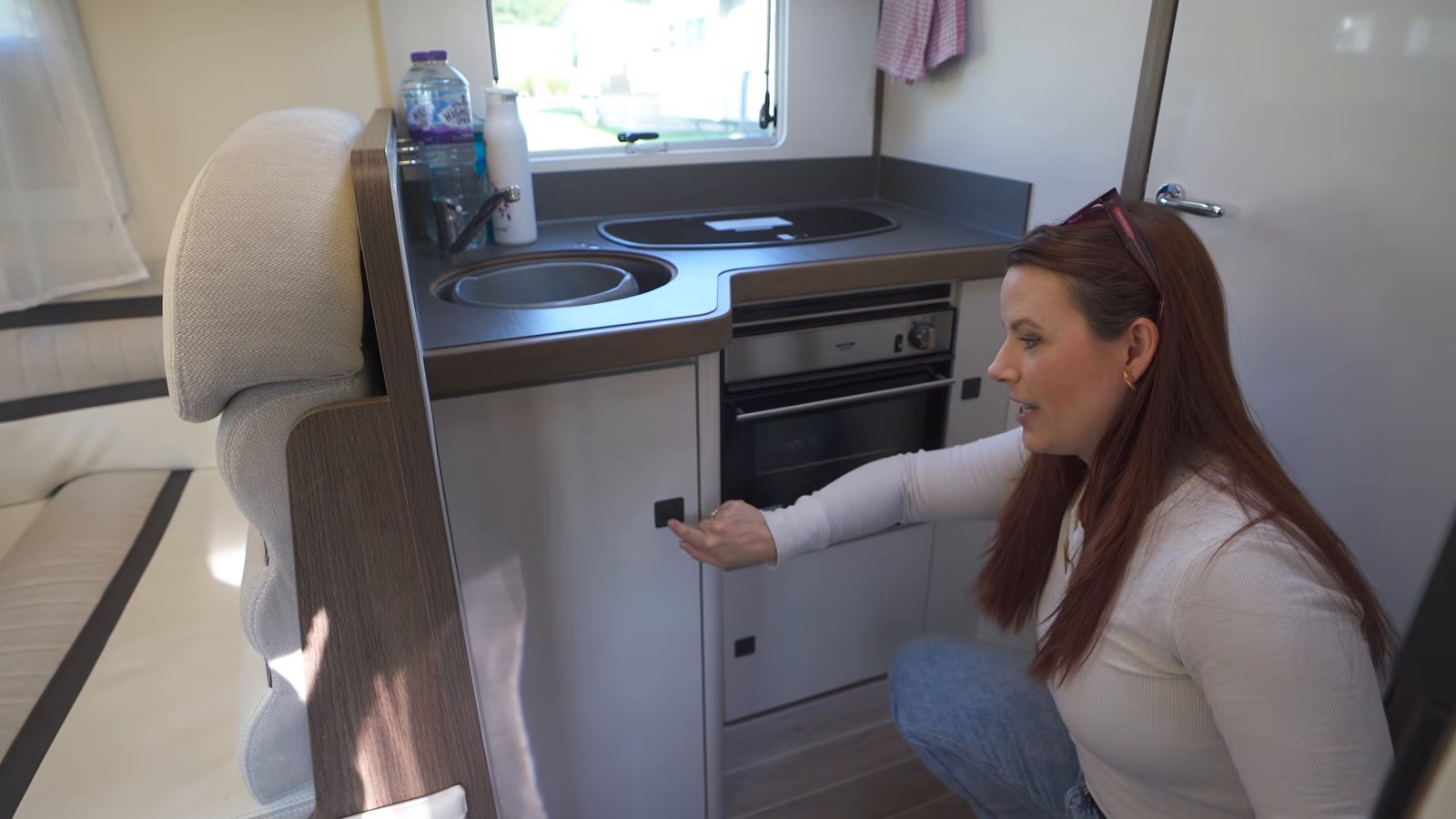
- Privacy and air. Privacy shades and blackout blinds on the windows, covers for the front windows at night, and roof vents and windows that pop open for a cross breeze. There’s heating and ventilation, but no air conditioning.
- Off-grid. Almost everything worked without a hook-up: the shower, the heating, the stove and the fridge. The one thing that didn’t was the UK three-pin socket, which only works on mains power, so you can’t charge a laptop off-grid. A USB port runs off the leisure battery, which charges while you drive. We had one night without a hook-up, and Kevin was impressed by how well the van did off-grid.
- Staying connected. Many campsites have Wi-Fi. Away from them, we used an eSIM for data on our phones and were connected most of the time, which we needed for navigation.
If you want to compare with a smaller, simpler van, our Travellers Autobarn campervan review covers one of the vans we rented in the US.
Where to sleep: campsites, apps and the wild camping rule
Every night that our videos show, we slept at a campsite or caravan park. Developed sites have showers, good bathrooms, shops, sometimes Wi-Fi, and electric hook-ups.
- Booking. We were there in September, and most nights we found a spot without much trouble; one night we simply drove past a campsite and pulled in. But sites were still pretty full: near Loch Ness we could only get a pitch without electricity, and on the Saturday we booked online ahead. In summer, the peak season, I’d book ahead.
- Park4Night. The staff at pick-up recommended the Park4Night app, and we used it all trip. It shows campsites with their facilities, and parking areas you can use during the day or overnight. That matters because so many car parks and turnarounds are too small for a camper.
- Wild camping is about tents, not vans. You’ll read that you can park a campervan anywhere in Scotland. Be careful with that. The Scottish Outdoor Access Code says you can camp responsibly on most land in a lightweight tent, in small numbers, for no more than two or three nights in one place, but that access rights don’t include motor vehicles. Sleeping in a van is a question of where you are allowed to park overnight, so use campsites, or places that clearly allow overnight parking, and never park on private land or where signs say no.
The weather: plan for four seasons in a day
We had great weather for the first few days, and then Scotland reminded us who was in charge. We had sunshine, fog, rain and hail in single days; the fog took away Dunnottar, and the rain and wind took about half of our Skye plans. Bring layers, rain gear and sunscreen.
How I’d plan around it:
- Have an inland backup for every coastal stop. Craigievar saved our fogged-out coast day.
- Keep Skye flexible. Put your must-do hikes on whichever day looks best, and keep the short stops (Kilt Rock, Lealt Falls, Portree) for the bad days.
- Use the van. Coffee and a warm seat during a hailstorm at the Quiraing is the whole argument for a campervan.
What we’d do differently
- Add a night or two on Skye.
- Walk into Urquhart Castle the minute it opens, not just park early.
- Book campsites for weekends and for anywhere popular, even in September.
- Pack in soft bags that fit the van’s cupboards.
- Book the whisky tasting and the castle tours we missed ahead of time.
What our videos don’t cover
Our videos don’t cover these, so I can’t tell you about them from experience: Edinburgh itself, the inside of Stirling Castle or the Wallace Monument, Neist Point, Ben Nevis, Glenfinnan, or the North Coast 500.
Plan your trip
Affiliate note: this is an affiliate link. If you sign up through it, I may earn a small commission at no extra cost to you. Before a trip where you’ll be driving a big vehicle on unfamiliar roads, you can get travel insurance for your Scotland trip with SafetyWing. Check what it covers for driving, and sort out cover for the van itself with your rental company.
For more on planning a trip abroad, see Planning International Travel: What to Research.
Frequently asked questions
How many days do you need for a Scotland campervan road trip?
We did this loop in nine days with eight nights, and we’d have liked more time on Skye. If you can, add a day or two so that the weather doesn’t cost you the places you care about most.
Can you wild camp in a campervan in Scotland?
Scotland’s access rights cover responsible camping with a lightweight tent, but the Scottish Outdoor Access Code says those rights don’t include motor vehicles. We used campsites and caravan parks and the Park4Night app to find places to stay.
Is it hard to drive a campervan in Scotland?
It was nerve-racking at first, especially driving on the left, but Kevin got used to it within a couple of days, and I drove it too. The hardest parts were narrow roads, small car parks and the road up to the Quiraing on Skye. An automatic made it much easier.
What’s the best time of year for a Scotland campervan trip?
We went in September. Campsites still had some space, but they were pretty full, and we had every kind of weather. We can’t compare other months from experience.
Do you need to book campsites in advance?
In summer, we’d book ahead. In September we found most places on the day, but we booked ahead for a Saturday and couldn’t get an electric hook-up near Loch Ness.
Final thoughts
If you’re planning a trip to Scotland, we’d absolutely recommend a campervan. It let us park at Urquhart before the crowds, make coffee in a hailstorm on Skye and change plans every time the weather did. Pick an automatic, pack soft bags, book your weekend nights, give Skye more time than we did, and use the passing places.
Read next: Scotland Without a Car: A Guide for First-Timers and Campervan Hire Review: Travellers Autobarn.
