Kevin and I have been to Egypt twice, eight years apart, and both times we traveled the same corridor: Cairo and the pyramids in the north, Aswan in the south, and Luxor in between. In October 2016 we did it on our own, flew south and took a Nile cruise. In February 2024 we went back for nine days and did it the adventurous way, by overnight sleeper train and a night on a traditional felucca sailboat. This is the 2024 route, day by day, written so you can copy it or bend it, with the slower 2016 version alongside so you can choose.
The 2024 trip was a TrovaTrip group trip that Kevin and I hosted: people from our audience booked it, and TrovaTrip arranged the hotels, the guide and the transport through local Egyptian companies. Everything in this article is our own experience and opinion. I haven’t quoted prices anywhere, because every fee we paid has probably changed.
This article contains affiliate links. If you book or buy through one, I may earn a commission at no extra cost to you.
The short answer
Here is our nine-day route from February 2024, with where we slept each night:
| Day | What we did | Where we slept |
| 1 | Arrive in Cairo | Hyatt Regency Cairo West (near Giza) |
| 2 | Pyramids of Giza, a camel ride, the Sphinx, the Egyptian Museum | Hyatt Regency Cairo West |
| 3 | Saqqara and the Step Pyramid, Memphis, then the night train south | Sleeper train to Aswan |
| 4 | Arrive in Aswan, rest, Nubian dinner at a family home | Mövenpick Resort Aswan |
| 5 | A completely free day | Mövenpick Resort Aswan |
| 6 | A day and a night sailing on a felucca | On the felucca, anchored by the riverbank |
| 7 | Drive to Luxor, Karnak Temple | Sonesta St. George, Luxor |
| 8 | West Bank: Colossi of Memnon, Valley of the Kings, Hatshepsut’s temple; evening flight to Cairo | Cairo |
| 9 | Fly home | – |
- This route suits you if you want the big three (Giza, Aswan, Luxor) in about a week and a half, and you like a bit of adventure with your history: a night train and a night on a sailboat.
- Think twice if you need your own bathroom and a real bed every night, or you want to see Abu Simbel and the temples between Aswan and Luxor. For that, look at our 2016 cruise version further down.
- The one thing we’d change: add Luxor Temple. We saw it in 2016, but there was no time for it in 2024, and it’s only a short distance from Karnak.
Before you plan: two lessons from our first trip
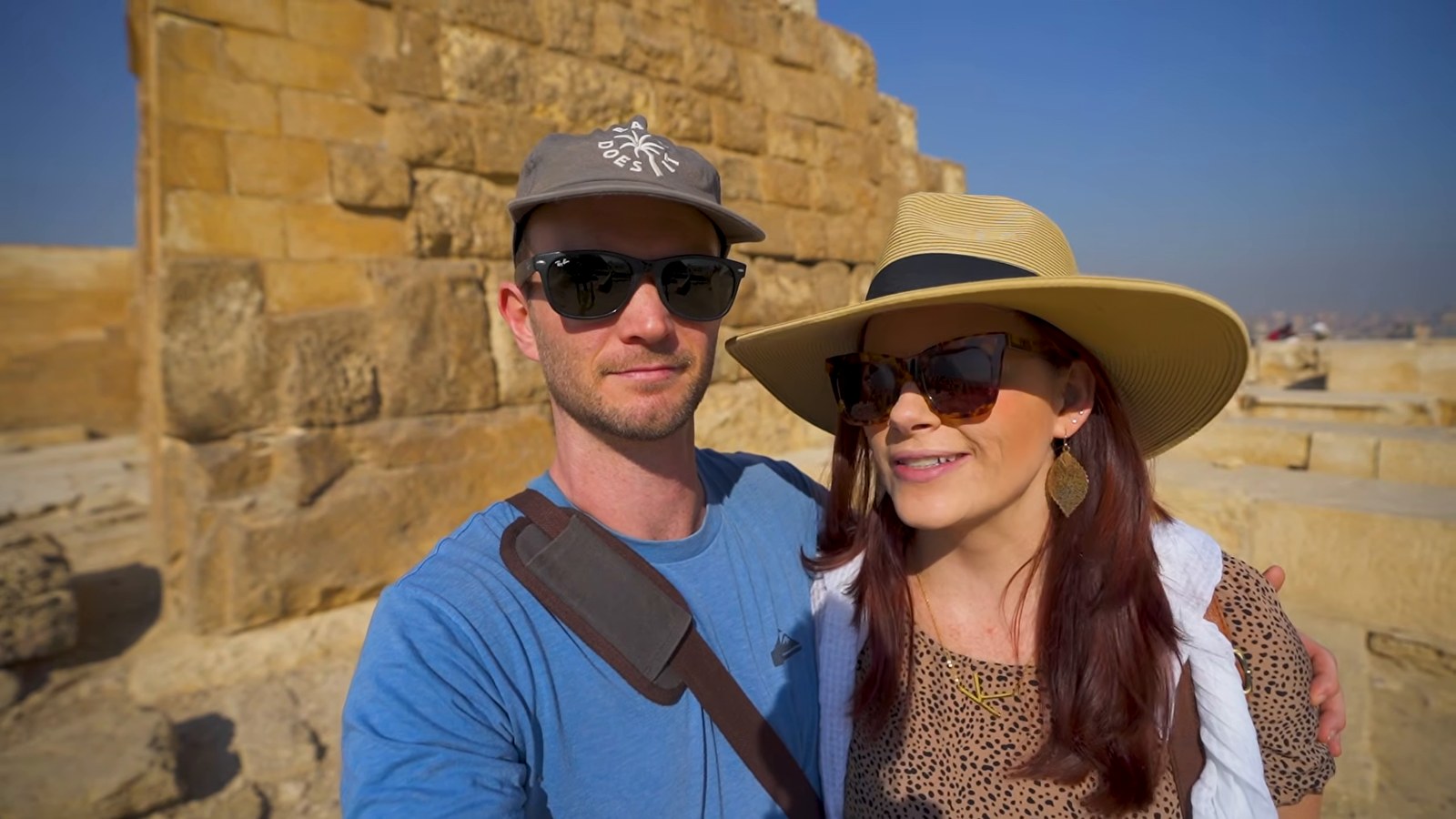
Egypt is one of the most rewarding places we have ever traveled, and one of the hardest. After our first trip we said that if we ever went back, we would do it with a guide the whole time and in nicer hotels. That is exactly how we planned the second trip, and it made a huge difference.
Get a guide, at least for the big sites. In 2016 we did a lot on our own, and it was exhausting. The vendors at the pyramids were the most persistent we have met anywhere: someone took the hat off Kevin’s head and put another one on him, and vendors tried to put scarves on me. A man at the gate of the Egyptian Museum told us it was closed to everyone except tour groups and walked us across the street to a shop. The museum was open the whole time. In Aswan, a friend of a friend offered to show us around, and on the last day we realized he was working as a paid guide; we had never agreed on what we were doing or what it would cost. The days with a proper guide were the best of that trip. In 2024 our guide was a registered Egyptologist who had been leading tours for 20 years and stayed with us the whole week. He had the tickets ready, knew which vendors were legitimate and warned us about the scams and places to avoid.
Pay for the better hotel. In 2016 we saved a little money on a cheaper hotel in Aswan and regretted it: we changed rooms more than once because of cockroaches, and one ran over my foot in the shower. We learned that a star rating in Egypt doesn’t mean what it means at home. In 2024 we made sure the group stayed in five-star hotels, and having a calm, clean room to come back to after a chaotic day was worth it.
Days 1 and 2: Cairo, Giza and the pyramids
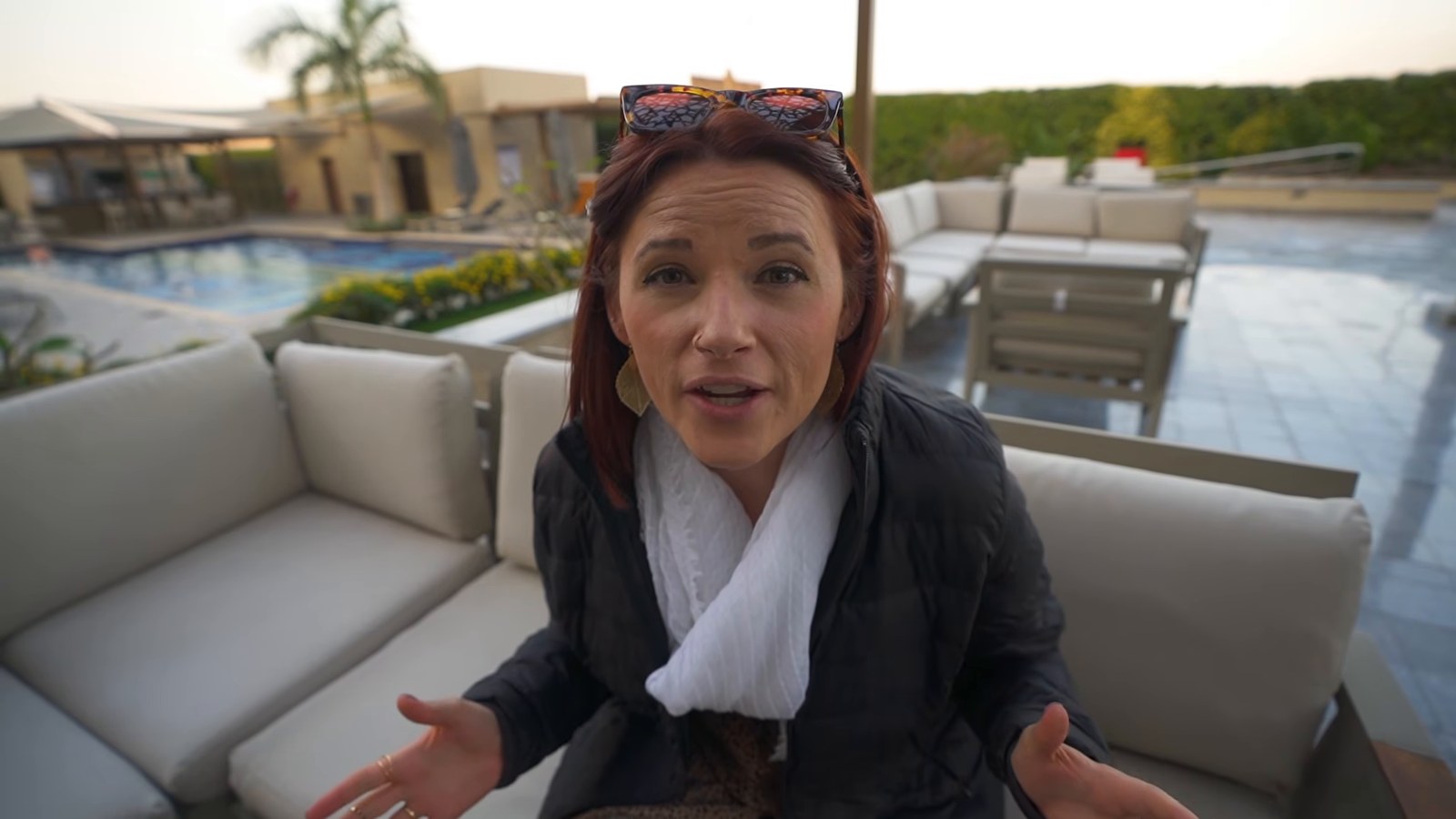
The trip ran from February 8 to 16, 2024. Day 1 was simply arriving, and our videos pick up on the first full day, at the pyramids. We stayed at the Hyatt Regency Cairo West, which is actually in the Giza area and was only about two years old when we were there. The Giza area had exploded with new hotels and housing since 2016, and we were really impressed with the Hyatt: very modern and clean.
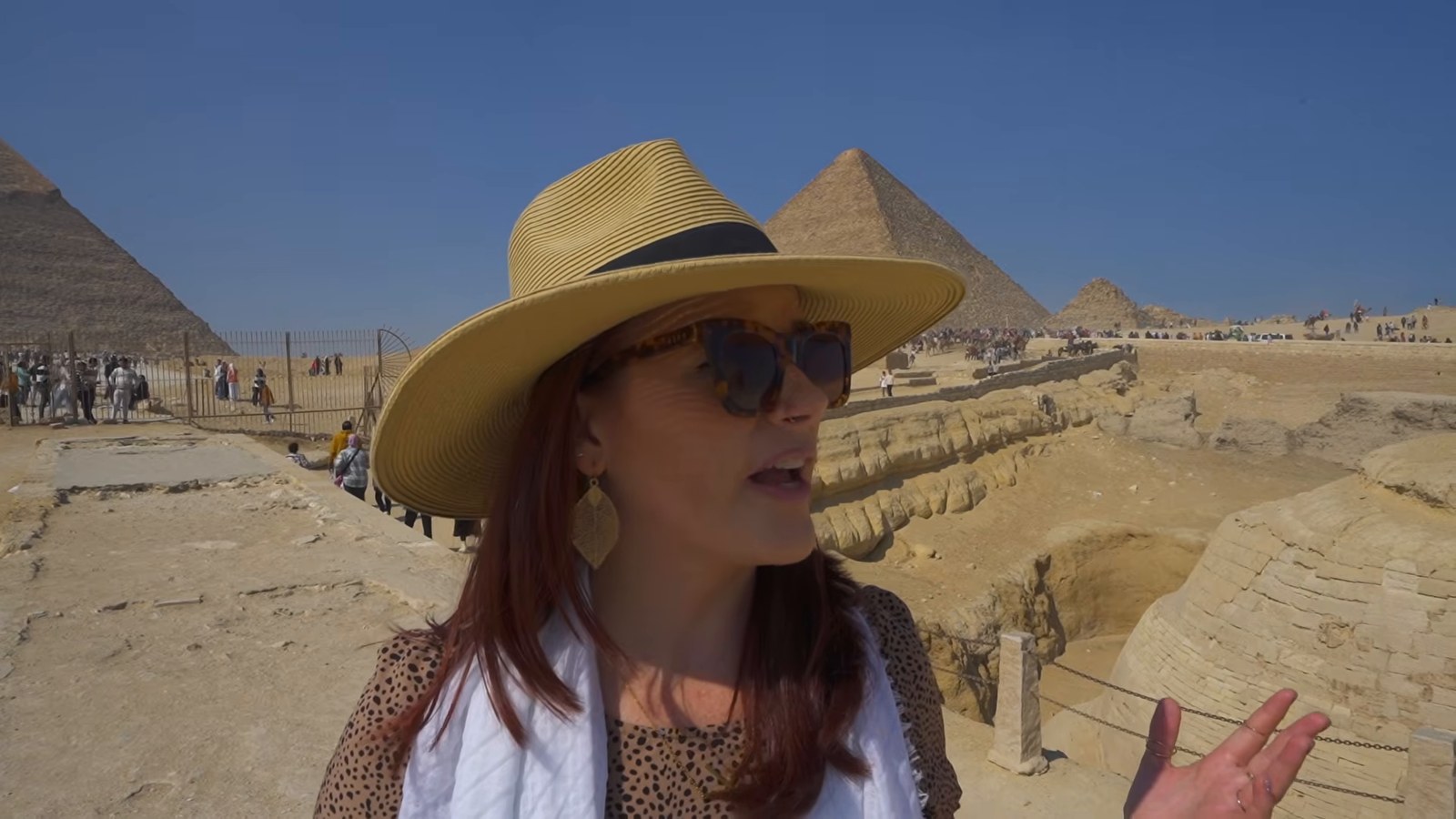
The pyramids. Day 2 started at the Pyramids of Giza. Our guide gave us a history briefing and then some free time to walk around. You can go inside the Great Pyramid on a separate ticket; we passed, because there seemed to be a lot of people squeezing through one tight passage and we were going inside pyramids at Saqqara the next day. Walking around the outside is amazing, but it’s hard to have a quiet moment: whenever you stop, someone offers you a camel ride or a souvenir. The approach that works is to not engage at all. Also, don’t hand your phone to anyone who offers to take your photo, because they may ask for money to give it back. If you aren’t traveling with a group, you can compare guided tours of the Giza pyramids; this is the site where we’d most want a guide.
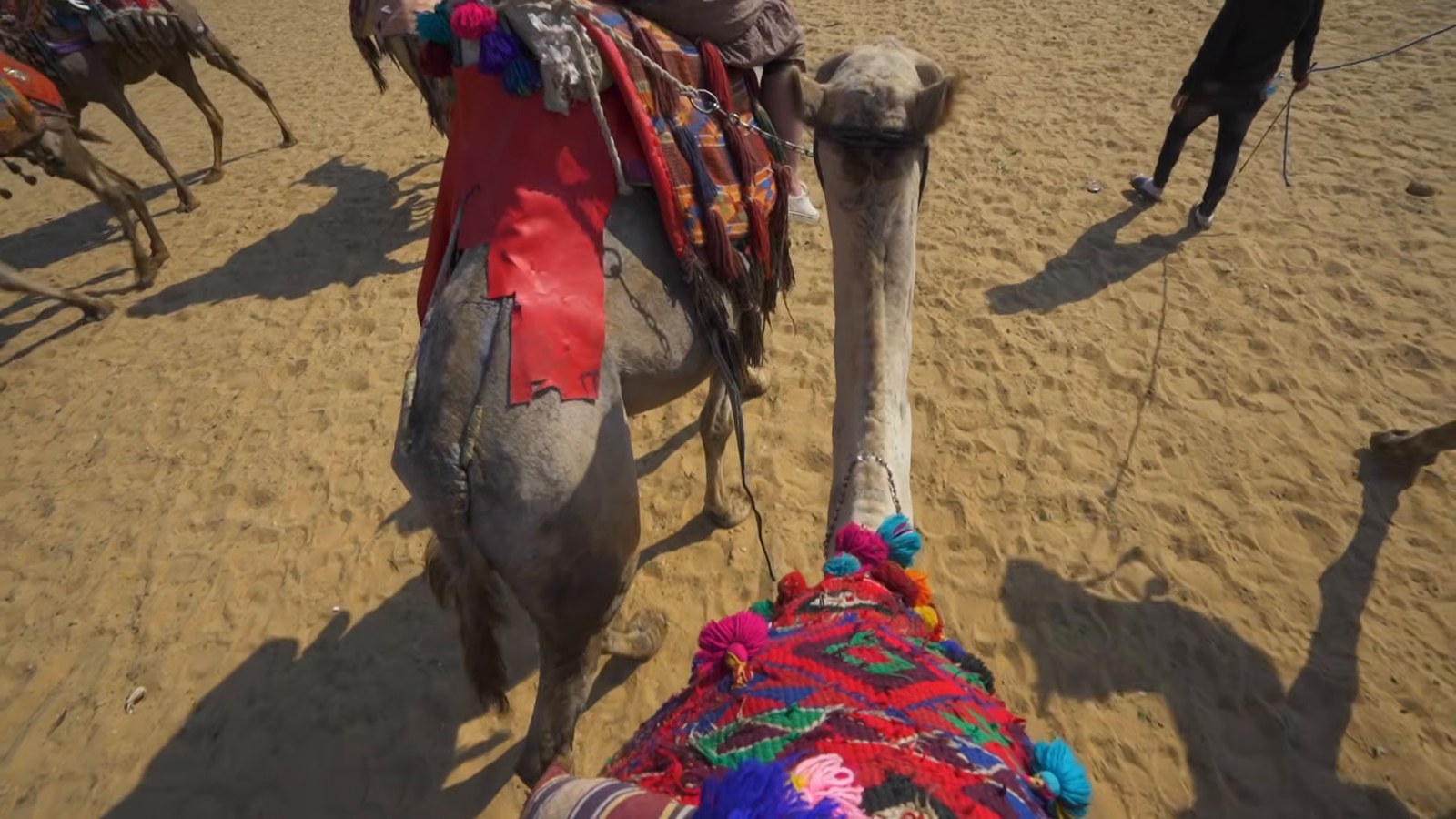
A short camel ride. Near the top of the Giza plateau we took a camel ride. Camel rides are controversial, so it mattered to us that our guide works with one supplier who looks after his camels well. He also told us never to take the horse carriages there, because the horses generally aren’t well cared for. The ride was short, just out into the desert for funny photos with the pyramids behind us. In 2016, when the front desk of our hotel arranged a guide for us, he found a man with well-kept camels and we rode out past the three main pyramids into the desert. Both times, we were glad we did it.
The Sphinx. From the plateau we went down to the Valley Temple at the base of the Sphinx and then to the Sphinx itself, which has a good view of the pyramids too. Our guide explained that the base of the Sphinx had been badly deteriorated and was rebuilt, so the base isn’t original.
The Egyptian Museum. After a grab-and-go lunch of local falafel sandwiches made with fava beans, we went to the Egyptian Museum in downtown Cairo, the old pink building. In 2016 we’d been told the new Grand Egyptian Museum would open very soon; eight years later it still wasn’t open, so we were back at the pink palace. This time a guide gave us an hour-long tour with earpieces and then an hour of free time, which was so much better than 2016, when we wandered around not really knowing what we were looking at. We spent our free time in the big King Tut section. There is nowhere inside to buy food or water, but there are plenty of cafes right outside.
What’s changed since: the Grand Egyptian Museum near Giza is now open, and its official ticketing site says a visit includes the Tutankhamun Galleries. Our videos don’t cover it, so check the official site for what’s on display in each museum before you choose, and buy tickets only from the official site.
Day 3: Saqqara, Memphis and the night train
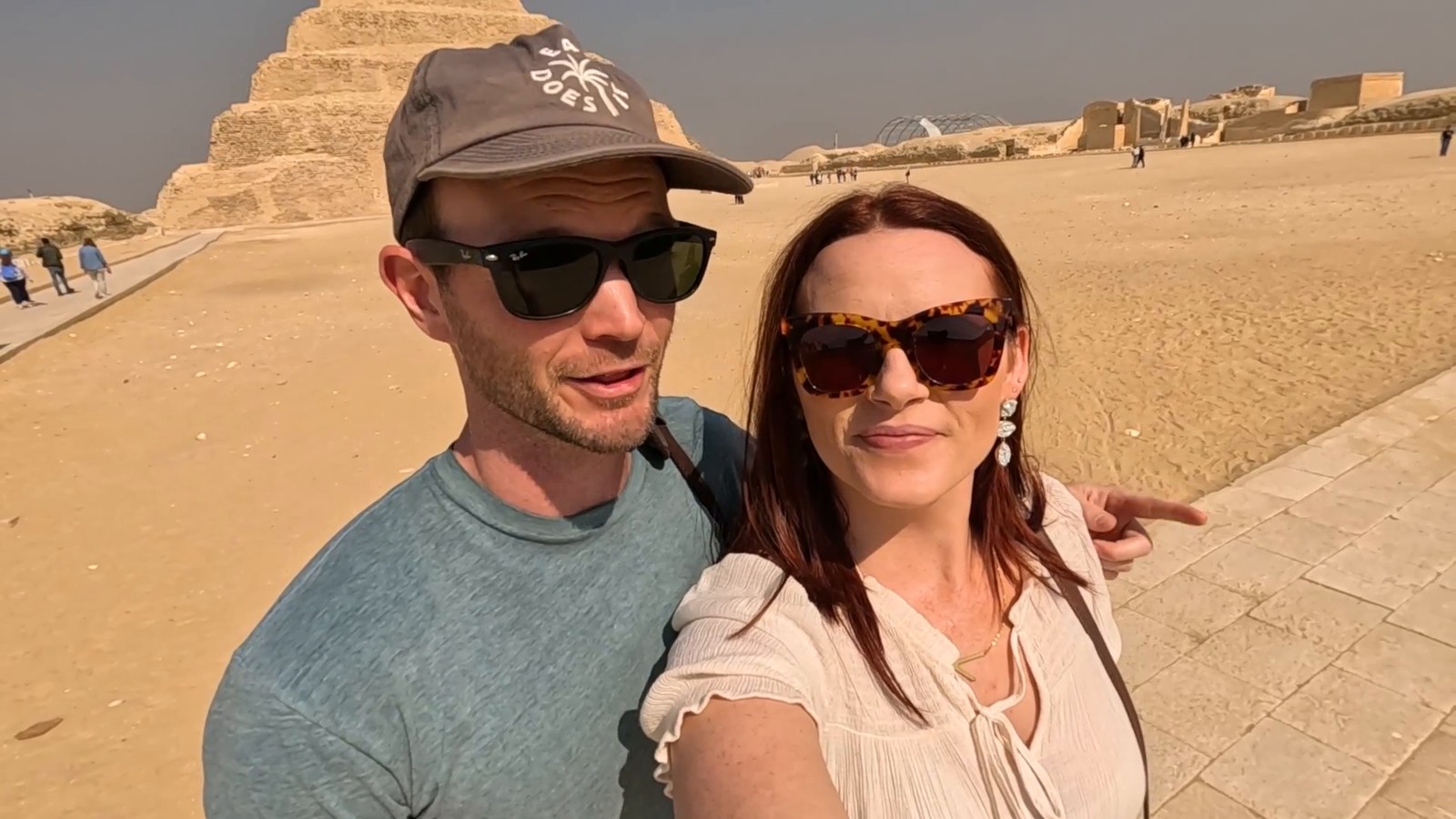
Saqqara, about 40 km southwest of Cairo, was new for us: we didn’t go there in 2016. It is home to the Step Pyramid of Djoser, which is considered the first stone building in the world and is nearly 5,000 years old. We went inside it, down a very long corridor to a huge shaft that looked about 90 feet deep. Our guide explained that a whole family was buried in this pyramid, not just one person. The inside of the Step Pyramid had only been open to visitors for a couple of years, so we couldn’t have gone in on our first trip anyway. The pyramid interior is sold as a separate ticket from the Saqqara site, according to the official Ministry of Tourism and Antiquities page, so check what your ticket or tour includes. If you’re planning this day yourself, many guided Saqqara tours combine it with Memphis, as ours did.
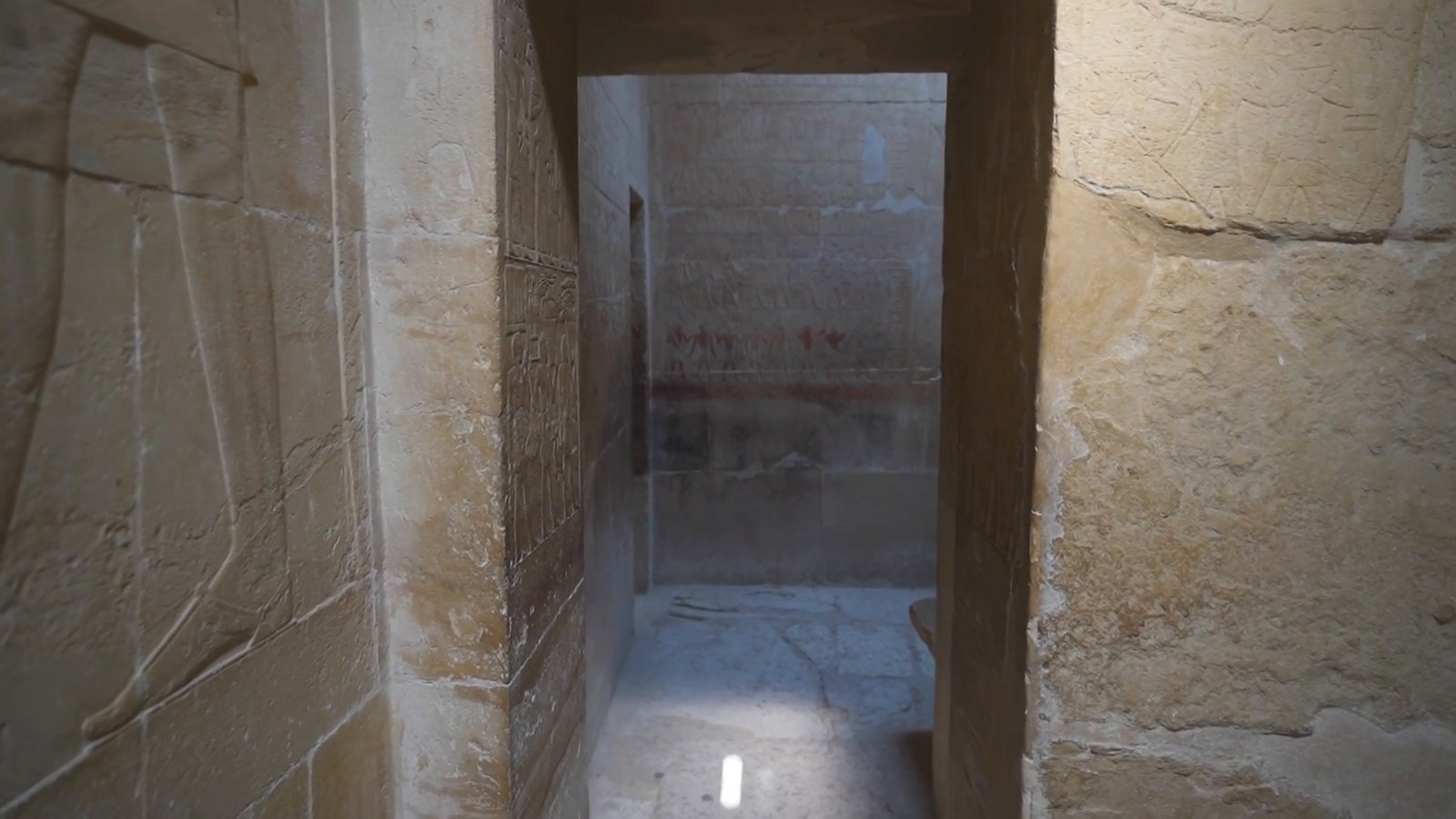
There is a lot of active excavation at Saqqara, and we also went into some newly uncovered tombs with incredibly detailed carvings, and down steep, tight stairs and passages. If you’re claustrophobic, know that in places you can barely stand up.
Memphis. Next was the Memphis open-air museum. Memphis was the first capital of ancient Egypt, and the museum gathers what has been found there: a huge statue of Ramses II, which was found face down in a boggy area, and the second-largest sphinx in Egypt. The rest is fragments of temples and statues scattered about, like an artifact boneyard. It takes only about 15 to 20 minutes to see.
A carpet school. Our last stop was one of the carpet schools in Saqqara village, where families weave carpets by hand on big looms, sometimes for years on a single carpet. Afterwards there’s a showroom where you can buy.
Then we went back to the hotel, where we’d been given a late check-out, finished packing and had an early dinner in the hotel restaurant before heading to the train station.
The sleeper train from Cairo to Aswan, honestly
One of the most popular and quickest ways between Cairo and Aswan is to fly. In 2024 we took the adventurous route instead: the overnight sleeper train. Here’s what it was actually like in February 2024:
- Timing. The trains were running late, and several trains of different classes came through before ours. We boarded at about 7:20 in the evening and got off in Aswan at about 9:20 the next morning: about 12 hours.
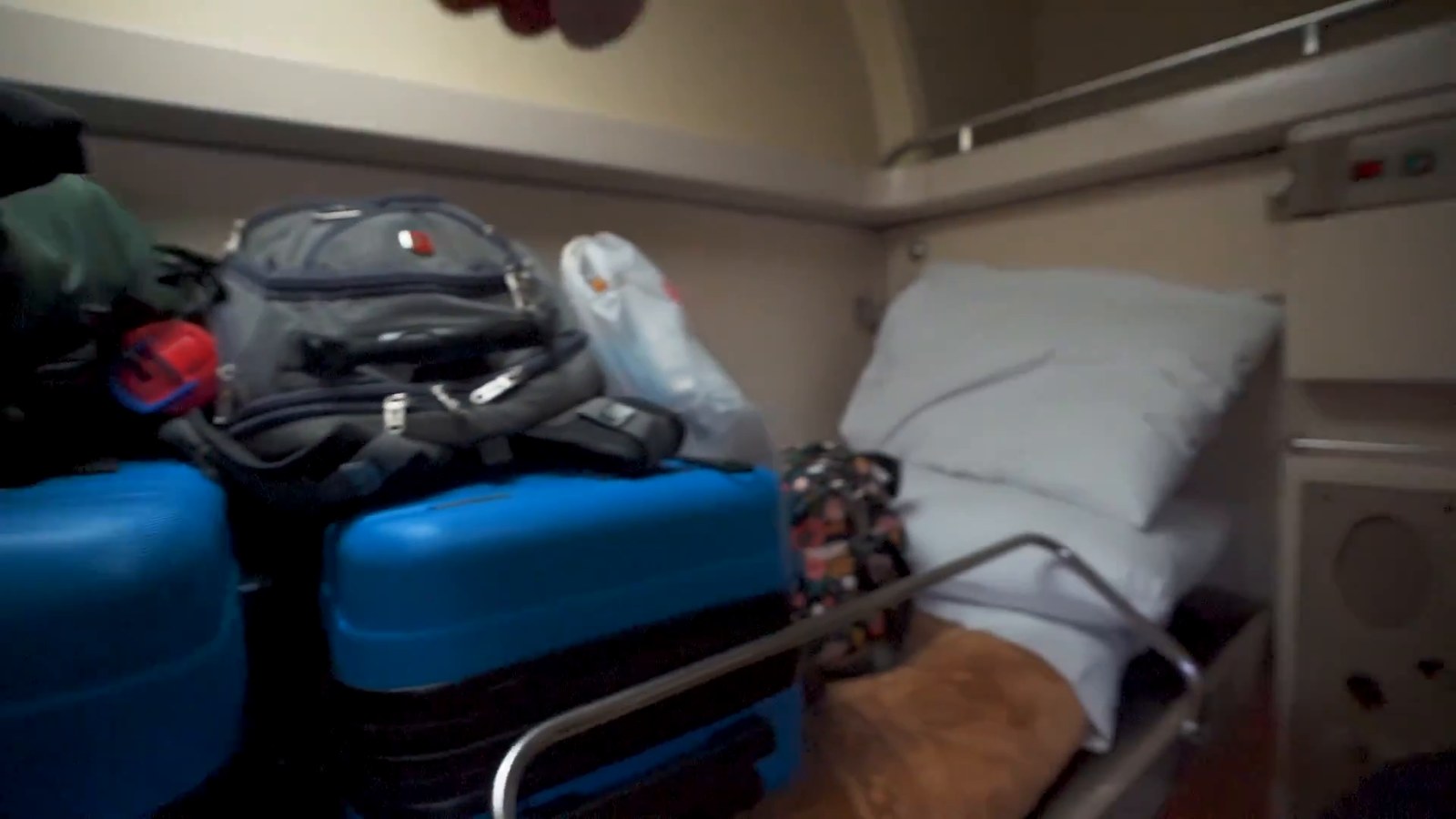
- The cabin. It’s cozy, which is a nice way of saying tight. There are two chairs that fold down into a bed, a top bunk, a little sink with soap, clean towels, a closet with a curtain and a power outlet that was enough to charge a phone. The bed was only about six feet long and the mattress was thin, but the blanket and full-size pillows looked clean. The attendant told us not to put our bags on the top bunk because the train shakes all night.
- The bathroom. Fairly big, and better than I expected: toilet paper, soap, paper towels and even toilet seat covers.
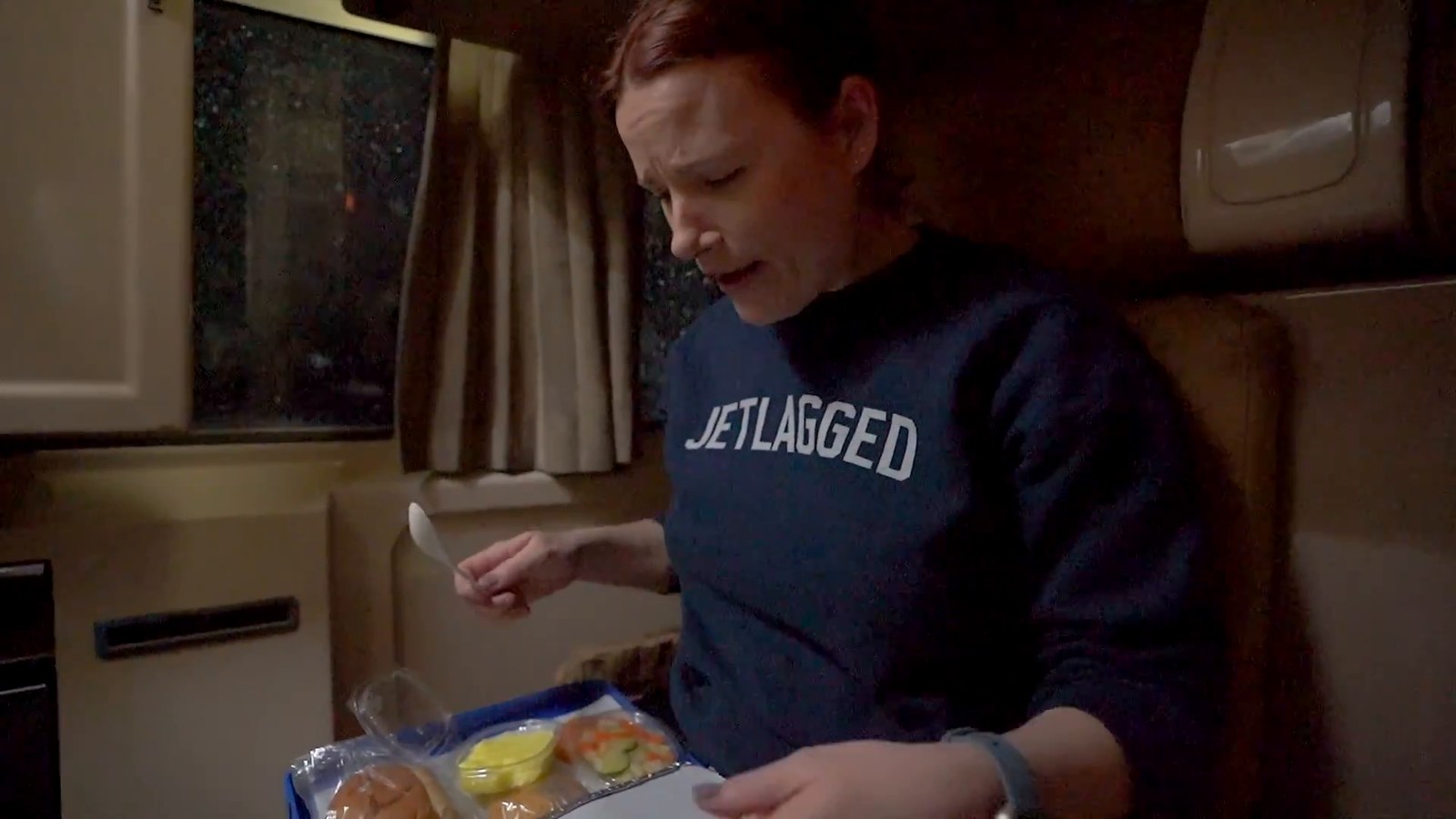
- Food. Dinner and breakfast were brought to the cabin. Dinner was chicken, rice, potatoes, a roll, a salad and a sweet yellow pudding, and it was better than we expected. We skipped the salad, since salad washed in tap water is a common way to get sick in Egypt. Breakfast was mostly bread with butter, honey and apple juice, plus coffee. No drinks came with dinner, so bring water. We bought snacks and water at a supermarket before we left.
- The club car. There’s a club car, but it was already smoky early in the evening, and our guide recommended avoiding it. I didn’t go.
- Sleep. It was loud and bumpy, but we both slept better than we thought we would. Bring earplugs.
- Entertainment. There’s no Wi-Fi and mobile signal comes and goes, so download movies before you board.
- The best part. The last hour, with the Nile outside the window.
Train or plane? If you’re short on time or want a real bed, fly, as we did in 2016. If you have the night to spare and like the idea of waking up beside the Nile, take the train. Today the sleeper is sold by Abela Trains (the old Watania sleeping-train site now redirects there), so check their site for current schedules and tickets.
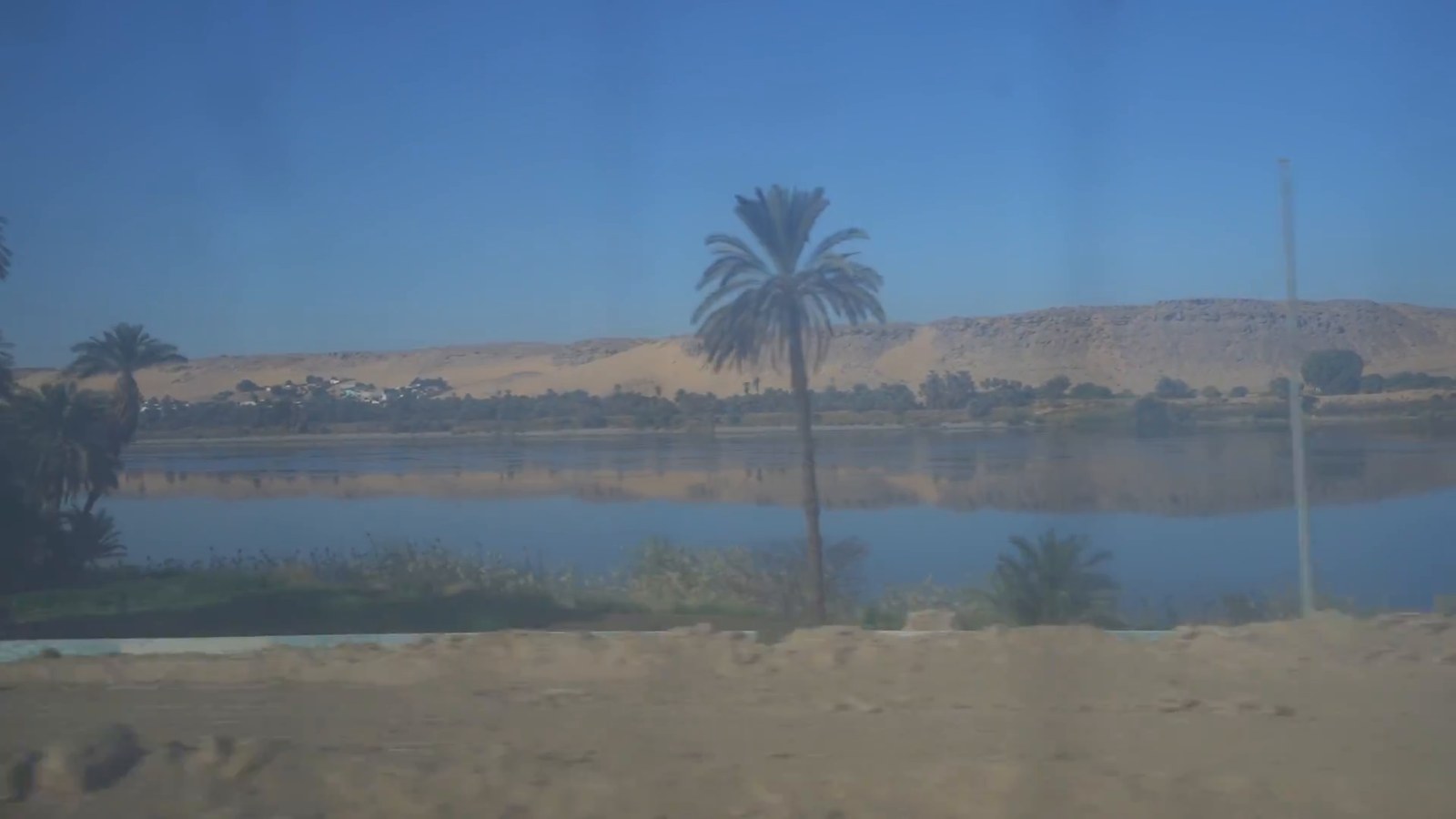
Days 4 and 5: Aswan
From the station we went straight to the Mövenpick Resort Aswan, which sits on Elephantine Island in the middle of the Nile. The only way to get there is by boat; the resort runs its own boats, which is easier than hiring a private transfer. They let us into our room early, which we weren’t expecting after a night on the train.
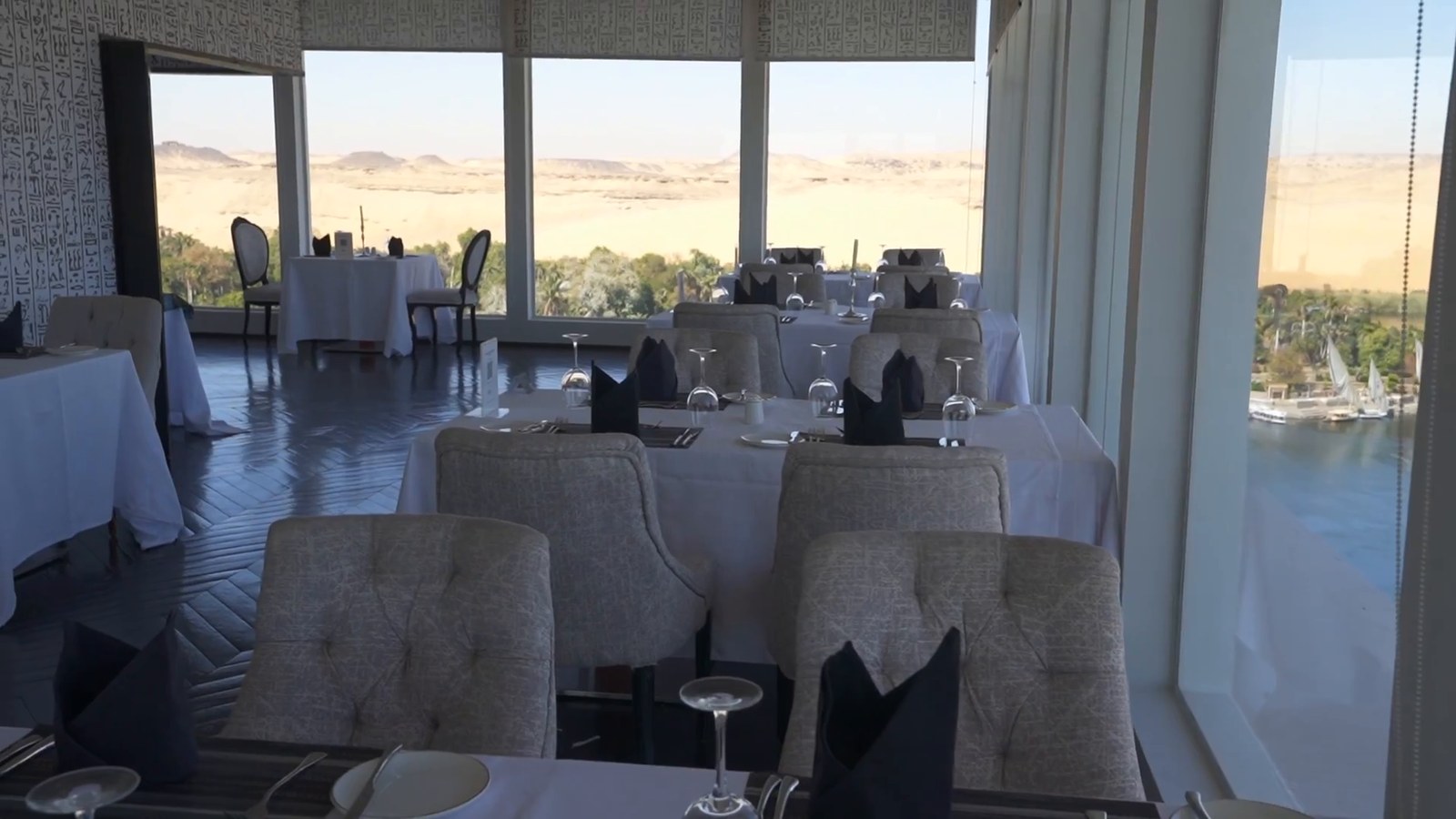
We stayed in the tower section, in a king room with a partial Nile view and a balcony. The room was clean and had everything we needed, if a little dated. Two things I’d point out: they gave us big bottles of water, because the tap water isn’t drinkable, and the sockets are the European two-prong type, so bring an adapter. The best view is from the Panorama restaurant on the 13th floor, which needs a reservation. In the grand scheme of Egyptian hotels, this place is very nice. On our first trip we nearly stayed here and chose somewhere cheaper to save a little money per night, which was one of the worst decisions ever.
Nubian dinner. On the evening of day 4 our group went to a Nubian dinner party, which turned out to be at a local family’s home. They made incredible Nubian dishes, we spent time talking with the family, and it ended in a dance party. It was really fun.
A free day. Day 5 had nothing scheduled, and we built that in on purpose. On an earlier group trip we’d found that nonstop activity is tiring, and in the middle of an Egyptian trip you need a break. One tip if you want to explore the island: the Nubian village on the other side of Elephantine is hard to reach on foot from the resort, because there isn’t a clear path, so you’ll probably need a boat.
In 2016, our Aswan days were different: we visited a Nubian village across the river, where the houses were painted blue and bright colors and camels ran down the street on their own, and we walked through a botanical garden. It’s a beautiful, sleepier city than Cairo.
Day 6: a night on a felucca
A felucca is a traditional Egyptian sailboat, and on our first trip we skipped it and wished we hadn’t. In 2024 we spent a day and a night on one with our group:
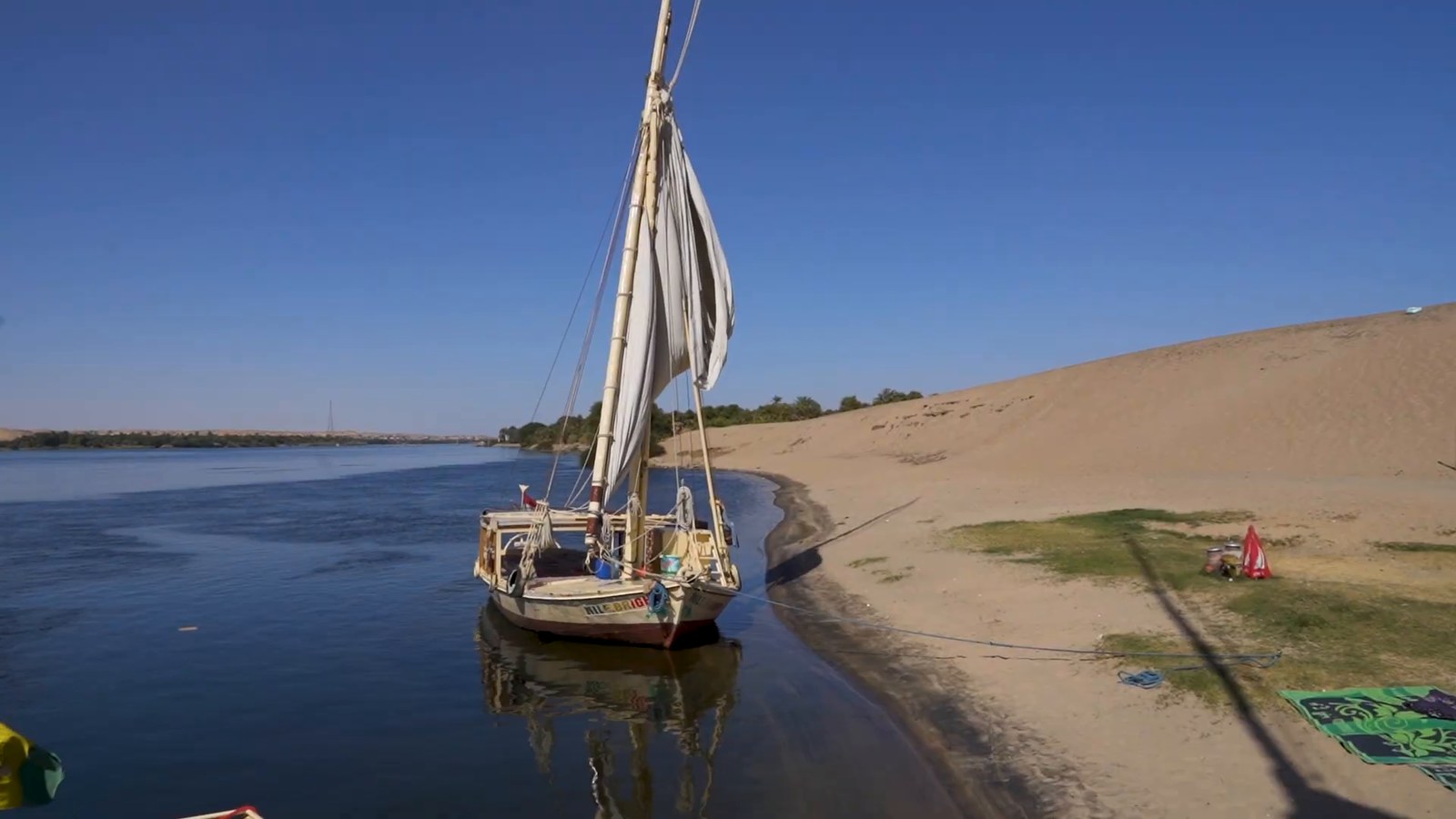
- There are no cabins. Everyone sleeps on one gigantic mattress on the deck. If you weren’t comfortable with your travel companions before, you will be after.
- There was a proper bathroom on board, with tiles, running water, plenty of toilet paper and even a shower head. As in a lot of places in Egypt, they asked us not to flush toilet paper.
- It’s slow and relaxing. We barely felt like we were moving, so I’d be surprised if anyone got seasick. The crew served coffee and tea, cooked lunch and dinner on board and took drink orders ahead of time, so you could have beer or wine. We spent the afternoon playing cards and reading, and stopped at some sand dunes where it looked like you could pay to go sandboarding.
- Don’t swim. Our guide made it very clear that jumping into the Nile isn’t recommended.
- At night the boat anchors on the riverbank. They put a mosquito net around the sleeping area, but it had big gaps, so bring bug spray.
- Bring layers. Mid-February afternoons were around 80°F, but it was chilly when we woke up around 7 a.m.
One thing to know: our felucca didn’t sail all the way to Luxor. In the morning, after breakfast on board, we crossed back to the other side of the river and drove the rest of the way by van, which took several hours, with one rest stop about halfway.
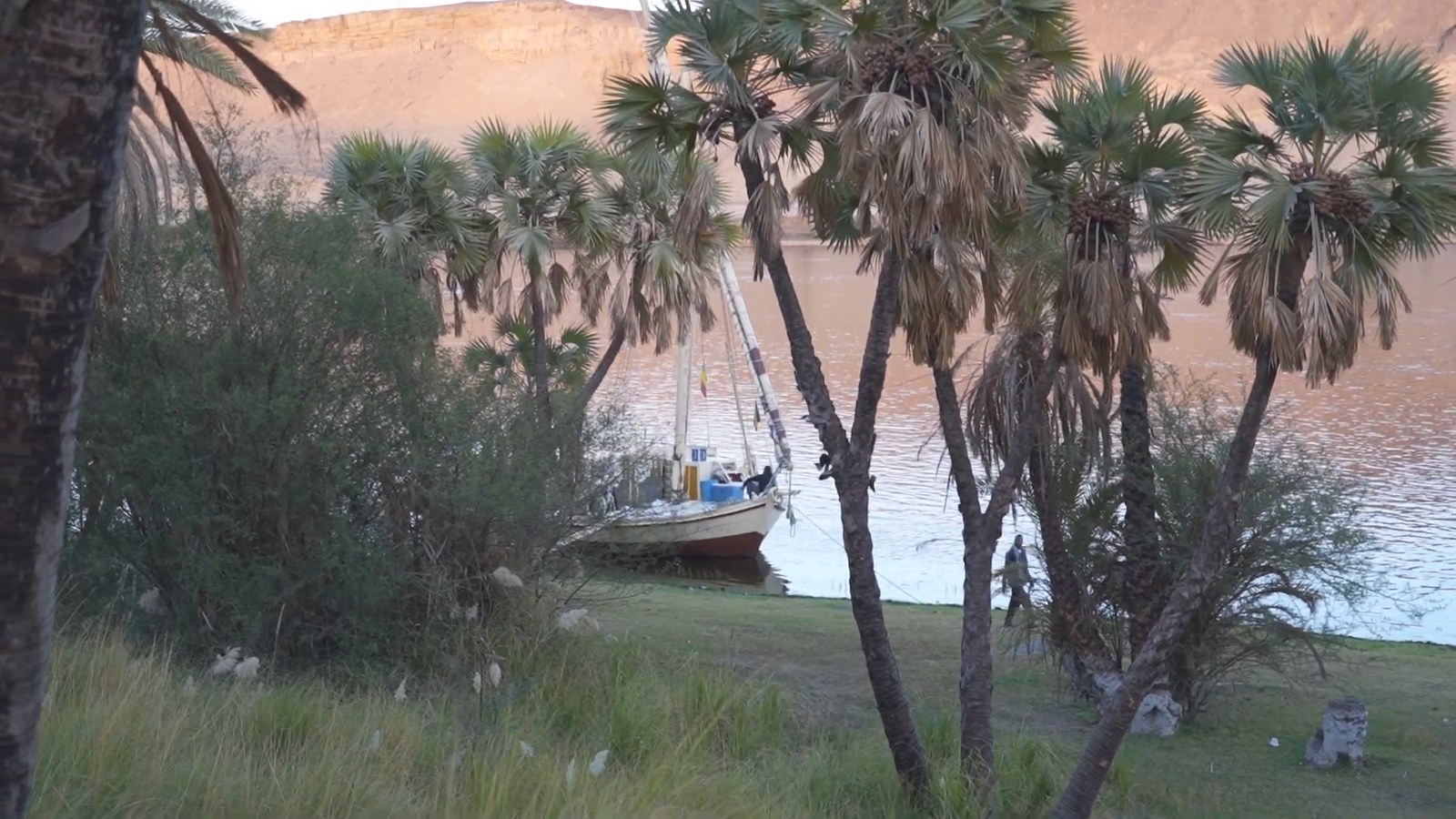
Day 7: Luxor and Karnak
This article contains affiliate links. If you book or buy through one, I may earn a commission at no extra cost to you.
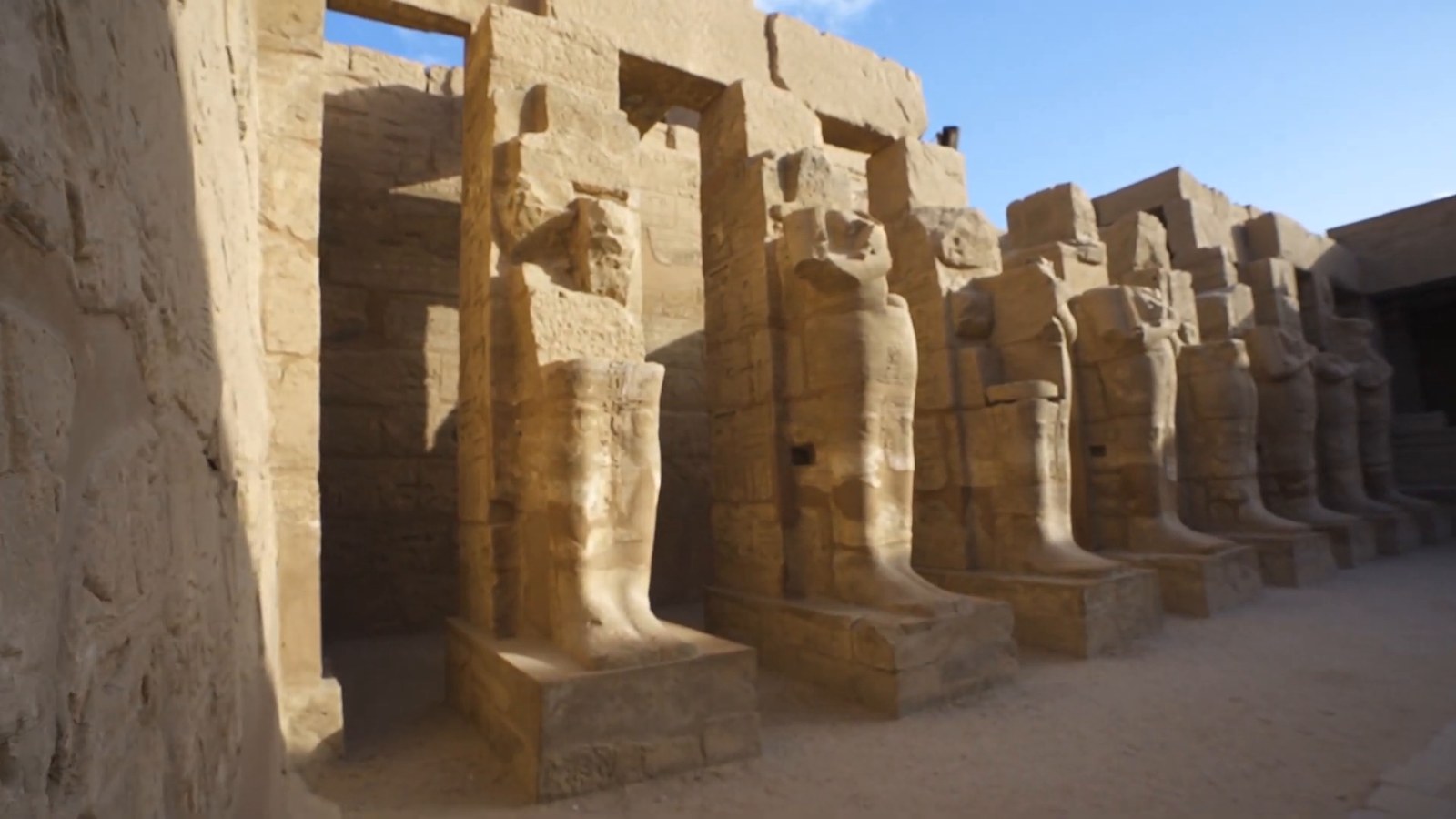
We checked into the Sonesta St. George in Luxor for about an hour, which was very welcome after a night on the felucca, and then went to Karnak Temple. It was our second time at Karnak, and it’s one of the most amazing things we’ve ever seen. It’s actually several temple complexes, and one of the largest in Egypt. Our guide spent the first hour explaining it, then gave us an hour to explore on our own, which is the right way to do a site this big. One of the best sections is the hall of huge pillars, where you can still see the original colors. Karnak was once connected to Luxor Temple by the Avenue of Sphinxes, which has been restored.
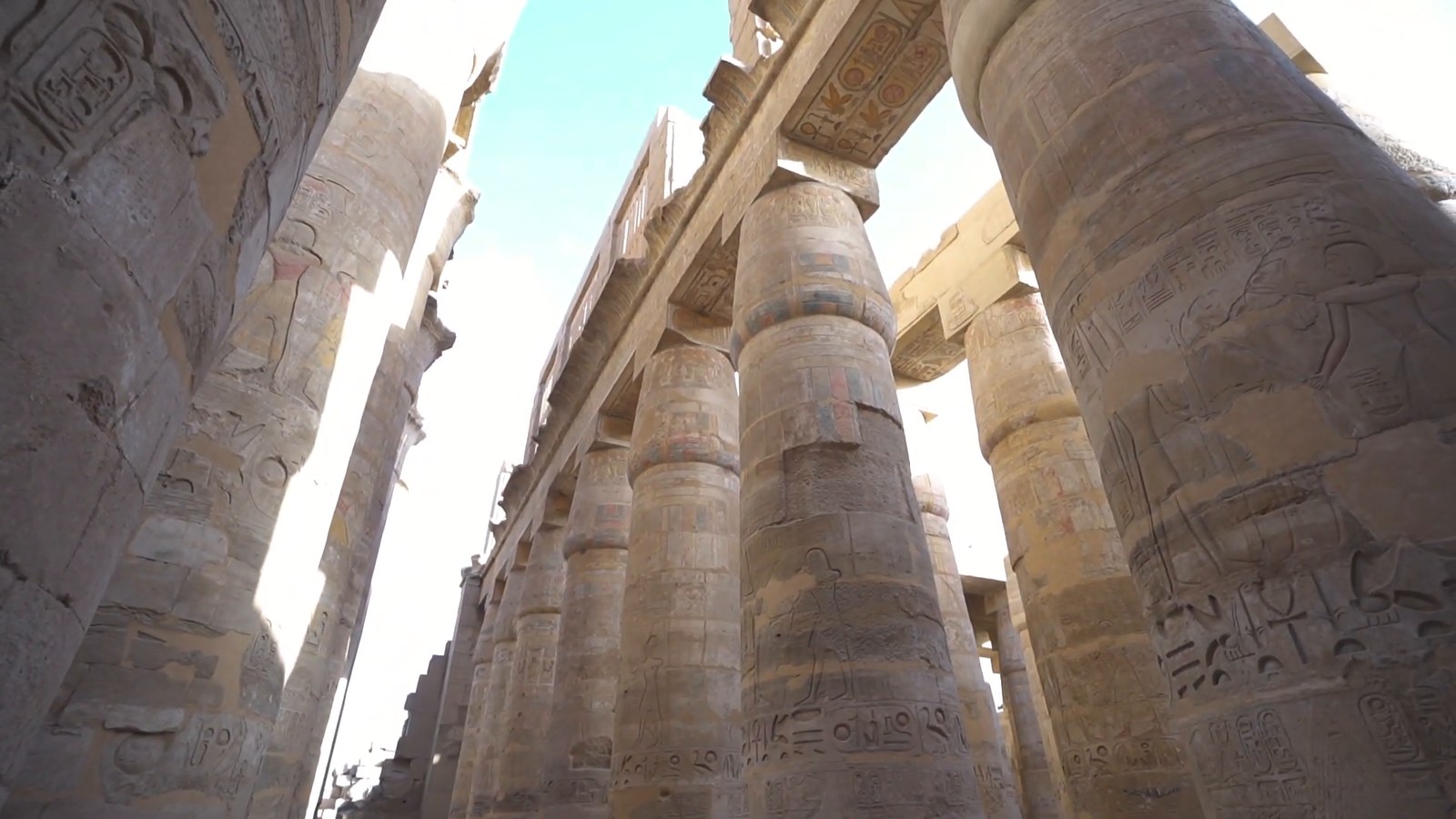
Be aware that the guards at Karnak will follow you around to show you things and then ask for a tip, and they were more persistent here than anywhere else on this trip.
Day 8: Luxor’s West Bank and the flight back to Cairo
The balloon that didn’t fly. A hot-air balloon at sunrise is one of the most popular things to do in Luxor. We were picked up at sunrise and took a ferry to the West Bank, but the wind wasn’t cooperating, and all the balloon rides were canceled for the day. In 2016 we skipped the balloon on purpose, so we missed it on both trips.
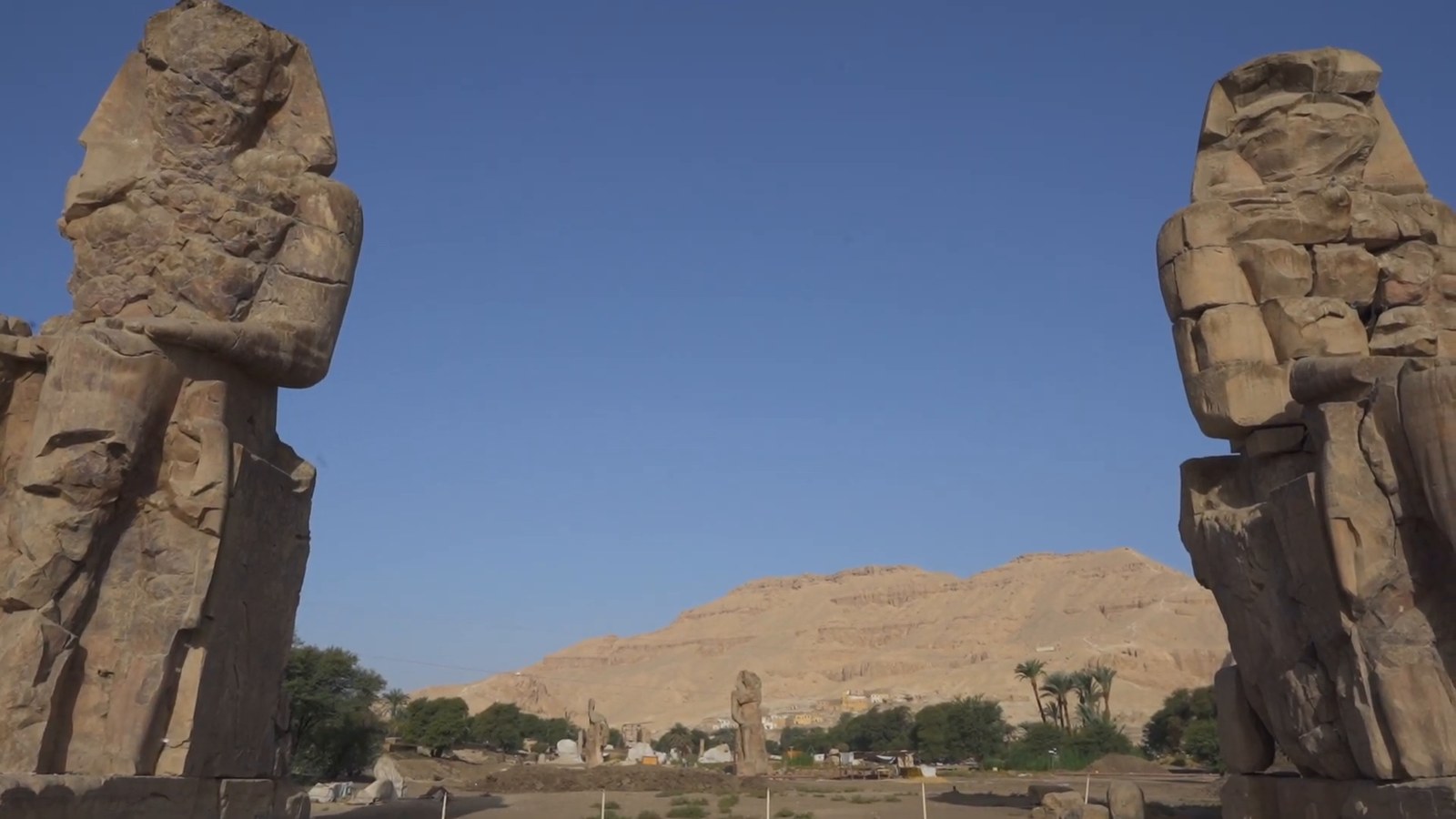
The Colossi of Memnon. We met the group at the Colossi, two huge statues about 3,500 years old, with an archaeological site behind them where a temple once stood.
The Valley of the Kings. This is where New Kingdom pharaohs were buried in hidden tombs cut into the hills; the Ministry of Tourism and Antiquities counts over sixty tombs. A buggy takes you up to the tombs, and our guide had the tickets ready, so we skipped the line. If you’re doing the West Bank on your own, a guided Valley of the Kings and Hatshepsut day tour covers the same main stops we did. Here’s how it worked for us:
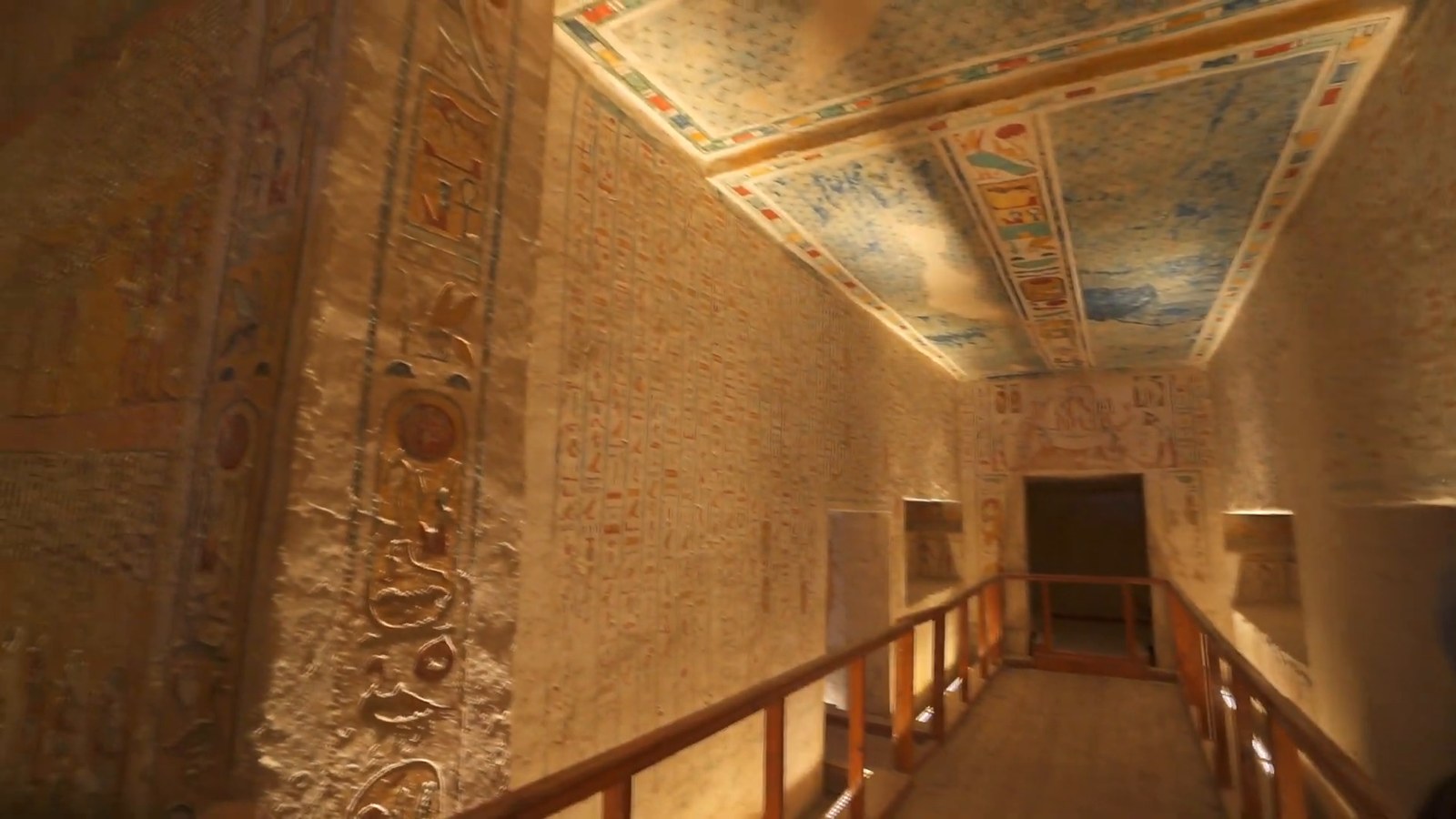
- The standard ticket covered three tombs. Our guide picked his favorites, starting with the tomb of Ramses IV, where some of the painting looks like it could have been done yesterday.
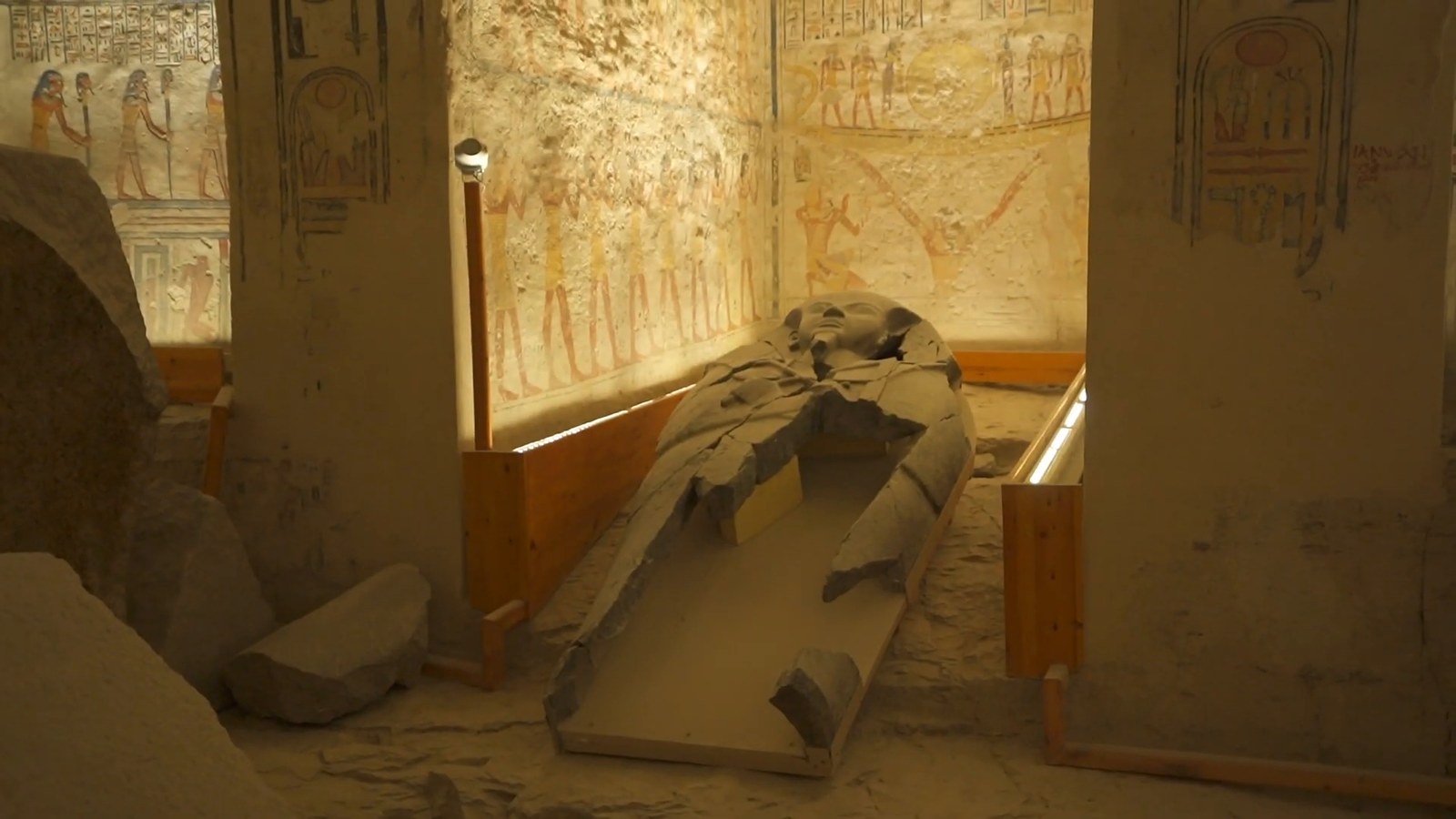
- We paid extra for the tomb of Ramses V and VI, and it was worth it. Because it’s a separate ticket, there were far fewer people inside, and at the end there’s a giant sarcophagus in a big chamber.
- When we visited, they only took card, not cash, for tickets.
- There’s a little coffee shop and a shady place to sit, and it gets very hot.
- In 2016 we also bought the extra ticket for King Tut’s tomb. The tomb itself isn’t very ornate, because he died young and was buried in a tomb that wasn’t built for him; the treasures that were found in it are the impressive part.
Hatshepsut’s temple. Next door is the mortuary temple of Queen Hatshepsut, one of the only women to rule all of Egypt. It isn’t huge or colorful like Karnak or the tombs, but her story is fascinating.
An alabaster workshop and lunch with a family. Like many set tours, ours stopped at an alabaster workshop. The men there were having a lot of fun, and there was very little pressure to buy. Lunch was at a local family’s home, which was lovely after the Nubian dinner in Aswan. Then we went to the airport and flew back to Cairo for our last night.
Day 9: flying home
The next morning we left Cairo and flew straight to Finland for our next trip, which is its own kind of culture shock.
The slower version: our 2016 route with a Nile cruise
In October 2016 we spent about 13 days in Egypt, on our own for most of it. If you have more time, or you’d rather have a bed and air conditioning every night, this is how we did the south:
- Cairo and Giza first. We stayed four nights in Giza, close to the pyramids, and used Uber to get to downtown Cairo; it was cheap and avoided arguments over taxi fares. We saw the pyramids, the Egyptian Museum and the Khan el-Khalili bazaar in the evening, with a friend who lived in Cairo. If I did it again, I’d split the time between Giza and Cairo itself.
- Fly to Aswan. We flew instead of taking the train.
- Abu Simbel. From Aswan we did the long day trip to the temple of Abu Simbel, which was moved to save it from the lake created by the dam. We were picked up at about 3:30 a.m. and drove through the desert for about three hours in a convoy of around 15 cars with a military escort. The temple is huge, and the hieroglyphics still have paint on them. It was a big effort and totally worth it. We had ours arranged through a local contact; you can also book an Abu Simbel day trip from Aswan.
- A cruise from Aswan to Luxor. We took a three- or four-night river cruise, booked with Memphis Tours, on a small ship: king bed, great air conditioning and all meals included. It came with our own guide, an Egyptologist, who sat down with us at breakfast to explain each day’s plan and took us to the sites at each stop: the unfinished obelisk at the granite quarry, the High Dam, the Temple of Philae on its island, Edfu and more, ending at Luxor Temple and Karnak. The cruise was a bit of a splurge for us, but it was the highlight of that trip. If you want to follow the same route, you can book a four-day Aswan-to-Luxor Nile cruise with a guide.
- Luxor. By the end we were so exhausted that we spent our one night in Luxor in the hotel room, then flew back to Cairo.
Felucca or cruise, train or plane?
| Choice | What it was like for us | Pick it if |
| Sleeper train Cairo to Aswan (2024) | About 12 hours, tight cabin, simple meals, loud but we slept | You want the adventure and to save a hotel night |
| Flight Cairo to Aswan (2016) | The quicker, more popular option | You’re short on time or want to arrive rested |
| One night on a felucca (2024) | Relaxing, shared deck mattress, then a long van ride to Luxor | You want a taste of the river and don’t mind roughing it for a night |
| Three- or four-night river cruise (2016) | Comfortable, all meals, a guide, temples along the way | You want to see the temples between Aswan and Luxor and a break from the chaos |
What we’d do differently
- Fit in Luxor Temple on the 2024 route; it’s close to Karnak.
- Build in a free day, as we did in Aswan in 2024. On our first trip we didn’t, and by Luxor we were too tired to leave the hotel.
- Agree on what a guide will do and what it will cost before you start, even if they’re a friend of a friend.
- Spend a little more on hotels. Both trips taught us that.
Egypt practicalities we learned the hard way
- Carry small change. Tipping, called baksheesh, is expected for almost everything, including unsolicited “help” at temples. On the group trip our guide collected money from us and handled tips for the whole group, which made life much easier.
- Bring toilet paper. In 2016, attendants in some public restrooms, including at the Egyptian Museum, handed out toilet paper for a tip.
- Be wary of friendly strangers with directions. Several times in Cairo in 2016, someone who offered to help us ended up leading us to a shop.
- Dress conservatively. Egypt is a Muslim country, and covering shoulders and knees is respectful. In 2016 I noticed a lot of men staring at me, so dressing modestly helps you blend in.
- Don’t drink the tap water, and be careful with salad.
- Bring a plug adapter for the European-style two-prong sockets.
- February vs October. In October 2016 it was hot. In February 2024 it was around 75 to 80°F during the day, with chilly early mornings on the river, and we loved it.
- Get connected. In 2016 we bought a SIM card at the airport; in 2024 we used an eSIM. Either way, having data made getting around much easier.
What our videos don’t cover
Our videos don’t cover these, so I can’t tell you about them from experience: the Grand Egyptian Museum, Alexandria, the Red Sea coast, the Siwa Oasis, Dendera, or Coptic Cairo. We also didn’t film our 2016 trip, so for that route I’m going on our memories and notes.
Plan your trip
Before a trip with this many moving parts, you can get travel insurance for your Egypt trip with SafetyWing. Check what it covers before you go.
For more on preparing for a trip like this, see Planning International Travel: What to Research.
Frequently asked questions
How many days do you need in Egypt?
Our nine days in 2024 covered Cairo, Giza, Saqqara, Aswan and Luxor, but they were packed. In 2016 we spent about 13 days and added Abu Simbel and a river cruise. You could never see all of Egypt in nine days, but it’s enough for the highlights if you keep a free day.
Is the sleeper train from Cairo to Aswan worth it?
For us, yes, once. It took about 12 hours, the cabin was tight and loud, and the food was simple, but we slept better than we expected and woke up beside the Nile. If you’d rather arrive rested, fly.
Is a felucca or a Nile cruise better?
They’re different trips. Our felucca was one relaxing night on a shared deck mattress, followed by a van to Luxor. Our cruise was three or four comfortable nights with a guide and temple stops. If you want the temples between Aswan and Luxor, take the cruise.
Do you need a guide in Egypt?
We’d strongly recommend one for the big sites. With a guide, the vendors, tickets and scams were handled for us; on our own for much of 2016, sightseeing was exhausting.
Can you still see King Tut’s treasures?
We saw them at the old Egyptian Museum in Cairo in 2016 and 2024. The Grand Egyptian Museum near Giza is now open and says its visit includes the Tutankhamun Galleries, so check its official site before you plan. King Tut’s tomb itself is in the Valley of the Kings, on a separate ticket when we went.
Final thoughts
Egypt isn’t a relaxing trip, but we talk about it all the time, and we loved it enough to go back. If this is your first time, go with a guide, stay somewhere comfortable, carry small change, and give yourself one day off in the middle. Then pick your adventure: a night train and a felucca, or a flight and a cruise. We’ve done both, and we’re glad we did.
Read next: Planning International Travel: What to Research and Morocco Travel Guide: Essential Tips for First-Time Visitors.
